 All stories


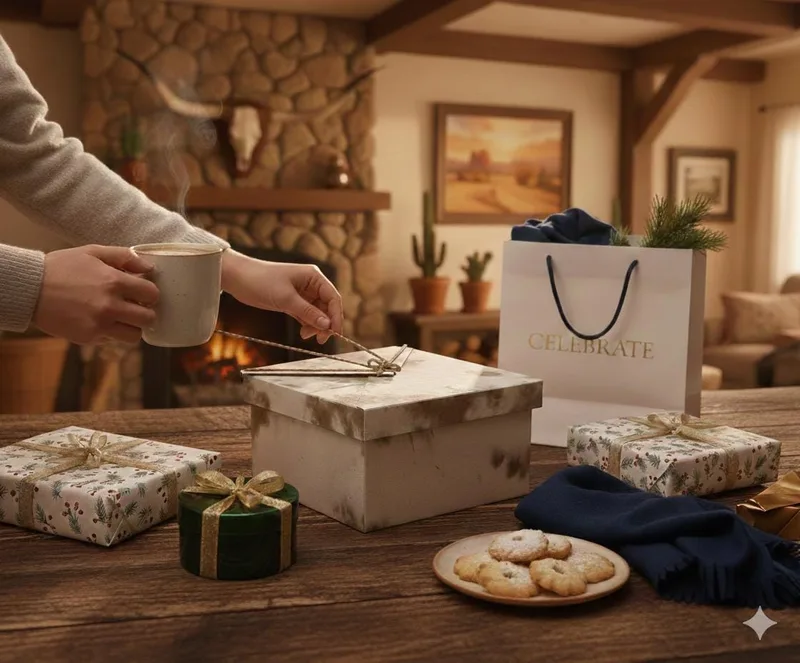
There was a time when wrapping paper had one job: hide the gift until the moment came, then get out of the way. The paper was torn, balled up, and forgotten in the same ten seconds. Somewhere in the last stretch of years, that changed. People now save ribbons, photograph boxes before opening them, and describe the way a package opened with the same enthusiasm they describe what was inside. The reveal has become part of the present, and it's worth understanding why, because it changes how a thoughtful giver should think about the moment of handing something over.
This isn't just a story about social media, although social media is in it. It's a story about what a gift actually is: not an object transfer, but a small performance between two people. Packaging turns out to be the staging.
The Reveal Was Always the Point
Strip gifting down and the object is only half of it. The other half is a moment: one person watching another person's face. Wrapping exists to manufacture that moment, to create a before and an after with a threshold in between. Cultures have understood this for a long time; elaborate wrapping traditions existed long before anyone filmed them. What's new is not the idea that presentation carries meaning. What's new is how much of daily commerce trained us to notice it.
How Watching Strangers Open Boxes Changed Us
Unboxing videos began as a niche curiosity and became one of the most watched genres online, which is strange on its face: millions of people watching a stranger open a package addressed to someone else. But the appeal is the same one gifting runs on, anticipation with a guaranteed payoff, and years of watching polished reveals quietly recalibrated expectations. When people see products emerge from tissue and branded boxes with a satisfying sequence to them, a gift handed over in the plastic shipping bag it arrived in starts to feel unfinished. Fairly or not, the bar for "this was presented with care" moved, and most of us absorbed the new bar without ever deciding to.
Small Makers Taught the Big Lesson
Independent sellers were early to understand this, for a practical reason: when you can't compete on price or shipping speed, you compete on feeling. A handmade item that arrives wrapped in tissue, tied with twine, with a handwritten thank-you tucked inside, delivers an experience a warehouse can't. Buyers noticed, and began mentioning the packaging in reviews as often as the product. The lesson traveled upward from there, and now thoughtful packaging is close to expected for anything sold as special. For gift-givers the takeaway is simpler: the people you're giving to have been receiving carefully packaged parcels for years. Presentation is a language they already speak.
The Sequence Is What People Remember
What separates a memorable reveal from ordinary wrapping isn't expense; it's sequence. A good unboxing has stages, and each stage delays the payoff slightly without frustrating anyone.
- An outer layer that gives little away, so the shape doesn't spoil the guess.
- A moment of friction in the middle, a ribbon to untie, tissue to unfold, a box within the box.
- Something personal before the object, like a card or note that lands while attention is at its peak.
- The reveal itself, oriented so the gift is seen the way you want it seen first.
- One small surprise after, a photo at the bottom of the box or a line written under the lid.
None of these steps costs much. Supplies from paper and party supplies cover most of it. The note before the object is the step people skip most and the one recipients mention most; attention peaks just before the reveal, which makes it the best real estate in the whole exchange.
Presentation Matters Most When the Gift Is Personal
The more personal the gift, the more the reveal deserves staging. Personalized gifts and custom pieces have a built-in second reveal: first the object, then the realization of what makes it theirs, the name, the date, the faces. Good presentation separates those beats. A custom portrait handed over in a flat mailer collapses everything into one glance; the same portrait unveiled after a card explaining the photo it was drawn from gives the recipient time to arrive at the personal detail themselves. If a group contributed to the gift, the presentation is also where the group gets to exist, with a card signed by everyone doing more than the wrapping ever could.
Ritual Without the Landfill
The honest objection to all this is waste, and it's a fair one; nobody needs a beautiful moment that produces a bag of unrecyclable foil and plastic ribbon. But ritual and waste aren't the same thing. Fabric wrap gets reused for years and is a small gift in itself. Plain paper with real ribbon recycles better than coated papers and often looks better too. Boxes worth keeping get kept; plenty of people store letters and small treasures in a gift box for a decade. And the parts of the sequence that carry the most feeling, the note before the object, the pause, the orientation of the reveal, weigh nothing and cost nothing. The trend, at its best, isn't about buying more packaging. It's about giving the moment the attention the object already got.
Why did unboxing videos become so popular?
They deliver the core pleasure of gifts, anticipation with a guaranteed reveal, in a repeatable form. Watching a package open borrows the suspense of receiving one, without any obligation attached. Their popularity also normalized staged, careful reveals, which quietly raised expectations for how gifts and purchases should be presented in everyday life. The genre works because the reveal, not the product, is the emotionally satisfying part.
Does gift presentation really matter that much?
Yes, within reason. The reveal is the part of gifting the giver actually controls in the moment, and a staged sequence, wrapping, a note, a pause before the object, measurably shapes how the exchange feels to both people. It cannot rescue a thoughtless gift, and it shouldn't cost more than the present. Its real function is signaling that the moment mattered enough to prepare for.
How can I make a gift reveal special without spending much?
Build a sequence instead of buying materials. Use plain paper or fabric you already have, add one layer of delay such as tissue or a wrapped inner box, and place a handwritten note where it will be read before the gift is seen. Orient the gift so it's revealed the way you want it seen first. The pacing, not the packaging budget, is what people remember.
Is elaborate gift wrapping wasteful?
It can be, but the meaningful parts of a reveal aren't the wasteful parts. Foil papers and plastic ribbon mostly end up as trash, while fabric wraps, reusable boxes, plain recyclable paper, and real ribbon carry the same ritual with far less landfill. The elements that matter most, a note before the object, a deliberate pause, a staged sequence, produce no waste at all.
Reviews & comments
See every public review for this Journal story and leave your own note.