 All stories


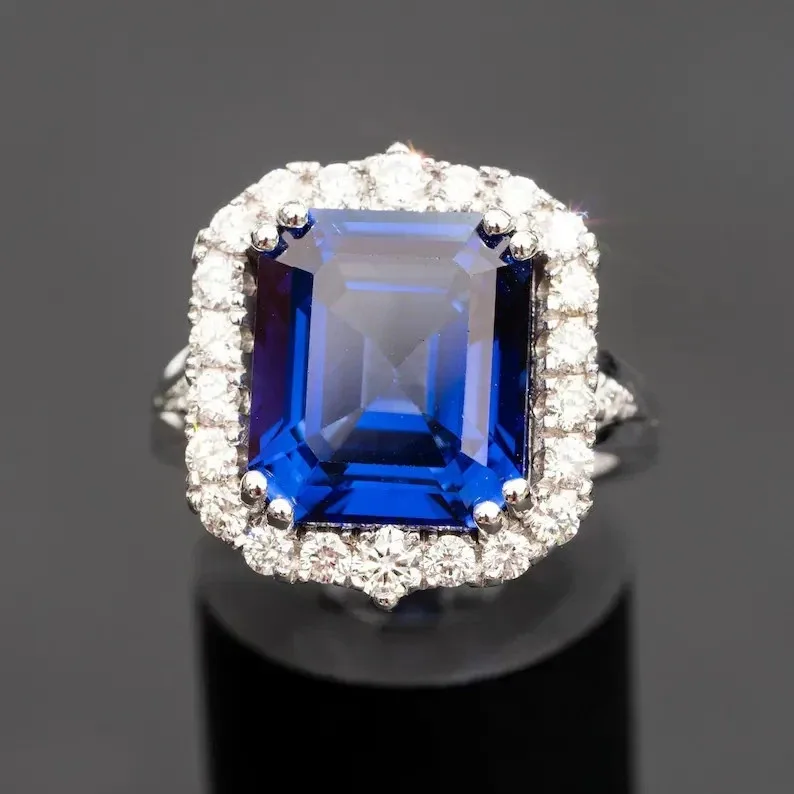
You have the plan, the place, maybe even the speech — and one number you do not have. Ask directly and the surprise is gone; guess wrong and the moment ends with a ring stuck at the second knuckle, or spinning loose while you are both pretending not to notice. Ring sizing is the one part of a surprise ring that cannot be improvised on the day, and it is the part most people leave for last.
The comforting truth from the marketplace side: buyers solve this constantly, without asking, using a small set of quiet methods that have worked for generations of jewelers. And when none of them are available, the fallback is not a coin flip — it is choosing a ring designed to forgive an imperfect guess. This guide covers both: how to measure without being caught, and how to buy when you cannot measure at all.
The Short Answer
Borrow a ring they already wear on the target finger and either trace its inside edge on paper or, better, have a jeweler measure it on a sizing mandrel — that takes two minutes and no appointment. If borrowing is impossible, recruit a friend or family member to find out. If neither works, buy a plain-band, resizable design in the middle of the common size range, err half a size large, and treat the resize as part of the gift.
Borrow, Trace, or Press
The most reliable secret method starts with a ring the person already wears — critically, one worn on the same finger of the same hand you are buying for, since fingers on one hand can differ from their twins on the other by a noticeable margin.
- Trace it: lay the ring on paper and trace the inside of the band with a sharp pencil, twice. A jeweler or an online size chart can convert the inner diameter to a US size.
- Press it: push the ring gently into a bar of soap or a piece of soft clay for a clean impression of the inner circle. This travels better than a paper sketch.
- Best of all, take the actual ring to a jeweler for ten minutes. A mandrel reading beats every home method.
One warning about the internet's favorite trick: wrapping string or a paper strip around the finger. Between the stretch of the string and the pull of the wrap, this method misses often enough that jewelers routinely warn against it. If you can measure the finger directly, a cheap plastic ring-sizer gauge — the kind that ships flat in an envelope — is far more trustworthy.
Recruit an Accomplice
If you cannot get near their jewelry, get near their people. A sister, roommate, or best friend can learn a ring size through channels you cannot: a casual try-on at a market stall, a "my ring or yours?" comparison, a borrowed ring at brunch. Choose one accomplice, not three — secrets scale badly.
This is also where planning tools earn their keep. If you are already coordinating a proposal or a wedding with a small circle, a shared Gift Room gives the conspiracy one quiet place to keep notes — the size once you have it, the jewelry candidates, who is doing what — instead of a group chat the recipient might glance at. The same setup carries straight into wedding planning if the answer is yes.
An accomplice with a good memory for detail can also simply notice: rings worn on which fingers, whether existing rings slide freely or leave a mark, whether the person constantly adjusts them. Those observations narrow a guess by more than you would expect.
If You Cannot Measure, Buy for the Resize
When no measurement is possible, shift the decision from "what size?" to "which designs forgive a wrong size?" — because they are not all equal.
Resizes easily: plain bands in sterling silver, gold, or platinum, with a stone set at the top and bare metal below. A jeweler adjusts these a size or two in either direction without drama.
Resizes with difficulty or not at all: eternity bands with stones the whole way around, tension settings that grip a stone by pressure, bands with continuous engraving or patterns that a resize would break, and rings made of tungsten, titanium, or ceramic, which cannot be cut and rejoined like precious metals.
So the no-measurement playbook is: choose a plain-band design in a resizable metal, buy in the middle of the common range, and round half a size up — a slightly loose ring goes on for the photo and gets sized after; a too-small ring never makes it past the knuckle. Two more physical facts help your guess: wide bands fit tighter than thin ones on the same finger, so size up half for anything chunky; and fingers swell in heat and shrink in cold, which is why a ring that fit at a summer barbecue may spin in January.
What to Look For (and What to Skip)
Look for:
- A stated size in the listing, or a made-to-size option — common with handmade and personalized rings.
- Plain metal at the bottom of the band, the sign of a resizable design.
- Half sizes offered, not just whole sizes.
- Sterling, gold, or platinum if there is any chance a resize will be needed.
- Sellers who answer sizing questions specifically rather than pasting a generic chart.
Skip:
- Tungsten, titanium, or ceramic for a surprise — beautiful materials, unresizable rings.
- Eternity-style bands unless you are certain of the size.
- One-size and "adjustable" wrap rings for milestone moments; they read as placeholders. Save adjustable designs for casual gifts, where they are genuinely useful.
- Guessing based on the recipient's height or build. Hands do not follow the rest of the body.
Budget Changes the Sizing Math
At the entry tier, a wrong size is an inconvenience: casual sterling rings — the kind that make easy anniversary or just-because gifts — are inexpensive enough that an exchange solves everything, so a good-faith guess is fine. In the solid middle tier, where gemstones and personalization enter, get at least one real data point before buying, and favor made-to-order rings where the size is part of the order. At the heirloom tier, do not guess at all: measure, recruit, or propose with a stand-in ring and choose the real one together — an increasingly common move that trades a small surprise for a ring that is exactly right. The catalog picks below this story sit in that middle band where one good measurement is worth the effort.
Mistakes People Make
- Measuring a ring from the wrong finger. A middle-finger ring says little about the ring finger. Fix: match finger and hand exactly.
- Measuring in the cold. Winter fingers run smaller. Fix: measure at room temperature, ideally later in the day.
- Buying an unresizable design on a guess. Fix: if the size is uncertain, the design must be forgiving — plain band, precious metal.
- Asking the recipient's mother, sister, and two friends. Four people keep a secret worse than one. Fix: one accomplice, chosen for discretion.
- Ignoring band width. A wide band bought in the measured size will pinch. Fix: go up half a size for wide or stacked designs.
What ring size should I guess if I have no information?
Buy in the middle of the common range for the recipient. Off-the-shelf women's rings are most often stocked around sizes 6 to 7, and men's around 9 to 10, which is exactly why retailers default there. Round half a size up, choose a plain resizable band, and plan on a quick adjustment afterward. A slightly loose ring survives the moment; a tight one does not.
Can any ring be resized after gifting?
No. Plain bands in sterling silver, gold, and platinum resize readily, usually by a size or two in either direction. Eternity bands with stones all the way around, tension settings, heavily engraved bands, and rings in tungsten, titanium, or ceramic generally cannot be resized at all. If there is any doubt about size, make resizability a requirement of the design, not an afterthought.
Should I size up or down if I am between sizes?
Size up. A ring that is half a size large can be worn immediately and adjusted later, or kept snug with an inexpensive sizing bead added inside the band. A ring that is half a size small may not clear the knuckle at all, which is a hard failure in a surprise moment. Wide bands strengthen the case for sizing up further.
Does it matter which hand I measure?
Yes. The dominant hand's fingers typically run slightly larger, often by about half a size, so a ring measured from a right-hand ring finger may not fit the left. Always measure the exact finger and hand the ring is destined for — and if you borrow a ring to trace, first make sure it is one the recipient actually wears on that finger, not one that migrates around.
Reviews & comments
See every public review for this Journal story and leave your own note.