 All stories


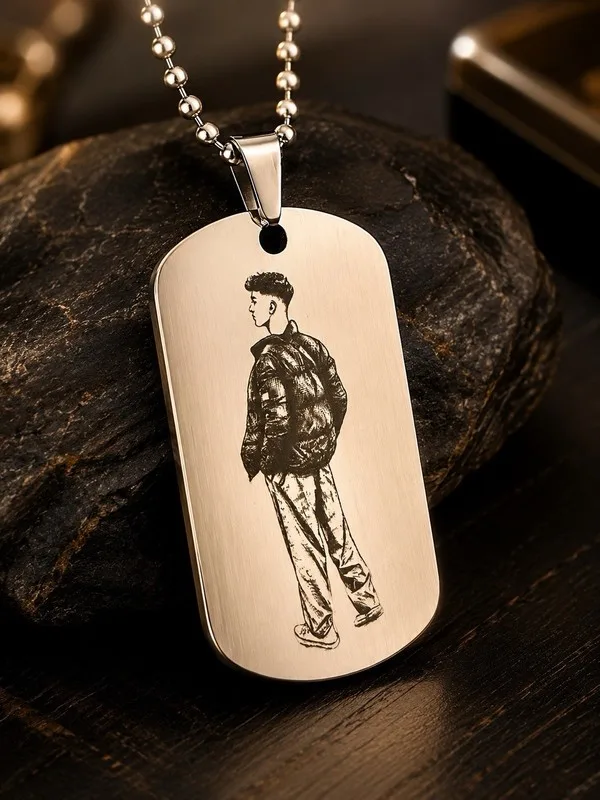
A custom gift usually goes wrong for a boring reason: the maker had to guess. The buyer knew exactly what they meant by make it feel like us, include the dog, use the blue from the invitation, or have it here before the party, but those details stayed in their head instead of reaching the person making the piece. A short brief turns a vague request into a workable creative job.
This is a reusable template for personalized gifts, custom portraits, caricatures, engraved pieces, and handmade work. It is not meant to remove the maker's judgment. It gives that judgment the information it needs.
The one-page brief
Copy this structure into the order notes or a message to the maker. Keep the first version short; add a second message only when a detail is genuinely important.
- Occasion and date: What is the event, and when must the finished piece arrive?
- Recipient: Who is receiving it, and how do you know them?
- People or pets included: List every subject and how they should be identified.
- Reference files: Name the strongest photo for each subject and say which details matter.
- Idea or story: What memory, place, hobby, joke, or milestone should the piece carry?
- Must-have details: Names, dates, colors, clothing, objects, wording, or symbols that must be correct.
- Do-not-change details: Glasses, a hairstyle, a crooked ear, a favorite jersey, or any feature that makes the person recognizable.
- Style and format: The requested style, approximate size, orientation, finish, and intended display location.
- Flexibility: What can the maker interpret freely?
- Delivery plan: The destination, deadline, and whether a proof or revision is needed before completion.
The most useful brief is not the longest one. It separates facts that must be right from preferences where the maker can bring taste and experience.
Start with the recipient, not the product
Tell the maker who the gift is for before describing the object. A custom illustration for a couple celebrating ten years is different from one for a friend who has just adopted a dog, even if both are technically two-person portraits. The occasion changes the emotional center, the tone, and often the details worth including.
A useful opening sounds like this: This is a housewarming gift for my sister and her partner. They restored a small blue bungalow together, and the finished piece will hang in their entryway. That gives the maker context without prescribing every inch of the composition.
If the gift is a surprise, say so. The maker may need to avoid sending messages that reveal the order, or may need a second contact method for a delivery question.
Attach references with labels
For a single subject, send one strong original photo and one backup if it shows a different expression or angle. For a group or composite, send one clear reference per person or pet instead of relying on one crowded group shot. Our photo preparation guide explains why sharpness, soft light, and visible eyes matter more than a flattering filter.
Label files in plain language: Alex front-facing, June with glasses, Maple full-body, or house reference. If a photo shows a feature that must remain, point to it in the note. If it shows a feature that should not be used, say that too.
Never upload somebody else's private photo without permission. For a surprise gift, permission to use the image is still your responsibility; the surprise is about the present, not about giving a maker an image the subject would not want shared.
Explain the story in two layers
First give the literal information: who, what, where, when. Then give the feeling: what the recipient should recognize or feel when they see it.
For example: Include the couple, their orange cat, and the porch from the reference photo. The tone should be warm and lightly funny, because the cat has effectively claimed the house. The first sentence prevents omissions. The second helps the maker make creative choices that a list of objects cannot.
Avoid instructions such as make it perfect or make it look exactly like the photo. If likeness matters, say which features carry it: her short curls and round glasses, his gap-toothed smile, or the dog's one ear that folds over. A maker can act on a specific observation.
Mark must-haves and nice-to-haves
A short priority system prevents the brief from becoming a contradictory wish list.
Must be correct: spelling, dates, names, number of people, requested orientation, and any feature the recipient will immediately notice.
Would be lovely: a favorite flower, a background detail, a particular prop, or a color preference.
Maker's call: composition, line weight, texture, cropping, and small decorative choices unless the listing promises something specific.
This distinction matters most when several people, pets, or reference images need to share one frame. The maker needs to know which constraints are immovable and where there is room to solve the visual problem professionally.
Choose format by where the gift will live
Say where the finished piece is going. A desk, hallway, gallery wall, nursery, office, or digital message each calls for a different practical result. Mention the available wall space, portrait or landscape preference, frame color if relevant, and whether the recipient will need to frame it themselves.
For a digital gift, specify whether it will be printed later. For a physical piece, confirm what is included: the artwork only, a frame, mounting hardware, a digital proof, or a final digital file. Do not assume that a beautiful listing photo shows everything included in the order.
JediPic is a discovery platform, so partner listings may send you to the original maker's shop for checkout. Read the listing details there, including production time, shipping, personalization limits, and the seller's proof policy.
Put the deadline in the first message
A delivery date is not the same as an order date. Custom work has a production window, then a shipping window, and sometimes a proof or revision window between them. State the date the gift must be in hand and the destination country or region. Ask the maker to confirm the timeline before you place the order.
If the deadline is tight, ask a direct question instead of hoping: Can this be completed and delivered to Chicago by October 12, including one proof round? A clear question lets the maker say yes, no, or suggest a safer alternative.
For more planning context, see why custom orders take time and the guide to made-to-order versus ready-to-ship gifts.
A filled-in example
Occasion and date: 10th anniversary; must arrive by October 12.
Recipient: My sister Maya and her wife, Lena. It is a surprise gift for their apartment.
Subjects: Maya, Lena, and their orange tabby, Pippin.
Story: They met at a neighborhood bookstore and now spend Sunday mornings reading on their balcony. A warm, playful feeling is right.
Must-have details: Keep Maya's round glasses, Lena's short dark curls, and Pippin's white chin. Please spell both names correctly if lettering is included.
Format: Landscape orientation for a 24-inch-wide entryway wall. We are flexible about the background and happy for you to choose the composition.
References: Maya-front.jpg, Lena-front.jpg, Pippin-eyes.jpg, balcony-reference.jpg.
Delivery: Please confirm production time, shipping time, whether we see a proof, and what is included in the package.
Notice what is absent: a paragraph dictating every pose, color, and brushstroke. The brief protects the meaning of the gift while leaving the maker room to make good art.
Check the proof like a gift giver
If the order includes a proof, review it against the brief, not against an imaginary perfect image. Check the things only you can verify: likeness, spelling, count of people and pets, important clothing or props, and the overall emotional tone. Ask for changes in one organized message. Several scattered messages create more opportunities for a detail to be missed.
If the proof is digital, save the approved version and the final delivery promise in one place. If there is no proof stage, ask what can be changed after ordering and what cannot. Knowing the boundary before payment is part of a good custom-order experience.
How do I write a custom gift brief?
Start with the occasion and recipient, then separate facts that must be correct from preferences where the maker can use their judgment. Add labeled references, the intended format, and the confirmed delivery deadline.
What photos should I send for a custom order?
Send the original, highest-resolution images you have, labeled by person or pet. Choose clear faces, useful angles, and consistent light; include one strong reference per subject for a group or composite.
How early should I place a personalized gift order?
Give the maker enough time for production, proofing, and shipping. Ready-to-ship gifts may need only a delivery buffer, while portraits, caricatures, engraving, and other made-to-order work should be discussed one to two months ahead.
The final checklist
Before submitting a custom order, confirm:
- The recipient and occasion are clear.
- Every person or pet is named and has a usable reference.
- Must-have details are separated from preferences.
- The intended size, orientation, and display location are stated.
- Production time and delivery deadline have been confirmed.
- Personalization spelling has been checked twice.
- You understand whether a proof, revision, frame, or digital file is included.
- You have permission to use the reference photos.
A good brief does something simple and valuable: it lets the maker spend their time solving the creative problem instead of reconstructing it. That is how a custom gift becomes specific to a person rather than merely decorated with a name.
Reviews & comments
See every public review for this Journal story and leave your own note.