 All stories


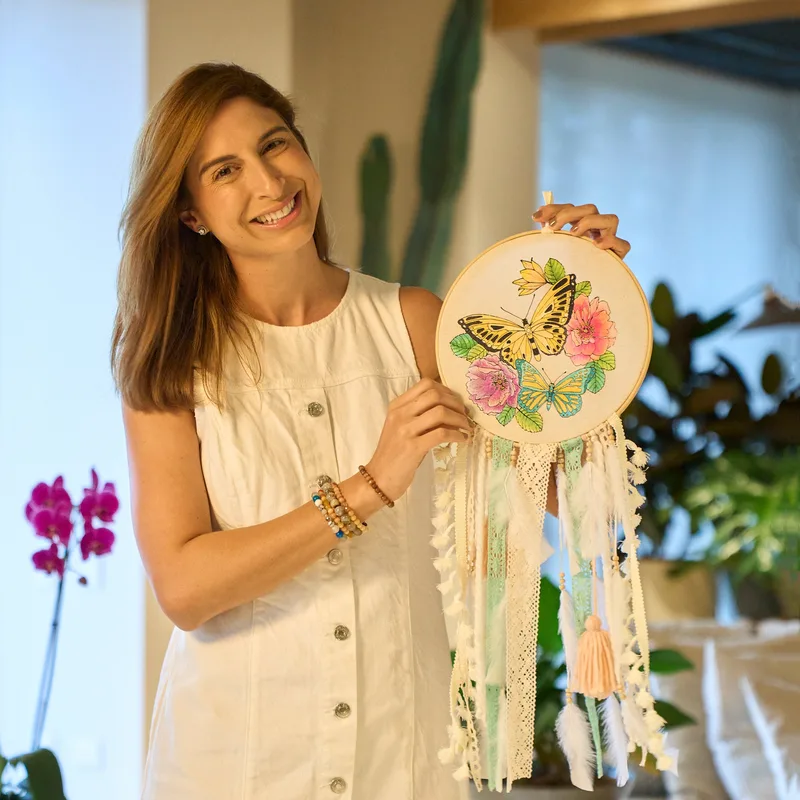
Open the junk drawer of any family with school-age kids and you'll find the evidence: a birdhouse with one wall painted, a friendship-bracelet loom with three inches of progress, a suncatcher kit still sealed in its inner bag. Craft kits get abandoned in a way other toys don't — not thrown out, not disliked, just stalled forever at the exact step where they got hard or boring.
The standard explanation is that the kid lost interest, but that gets it backward. Adults buy the finished object photographed on the box; kids experience the process inside it. When the process outlasts a child's attention span — or hits a step their hands can't do yet — the kit dies, and no amount of enthusiasm on day one prevents it. The good news is that abandonment is predictable from the box, if you know what to check.
The Short Answer
Match the kit to one sitting of the child's attention, not to the age printed on the box. For kids under about eight, that means a project finishable before dinner, with no drying-time gaps that require coming back tomorrow. Prefer kits where the result does something — glows, sticks to the fridge, gets worn — over kits that produce a shelf object. Be honest about mess, especially when gifting to someone else's child. Multipacks suit parties and siblings; save the single deep kit for the kid who already makes things daily.
Why Kits Get Abandoned (It Is Not the Kid)
Three structural failures account for most stalled kits. The first is the drying-time gap: paint it, wait for it to dry, then assemble. For an adult that's a schedule; for a seven-year-old it's an ending. The project that requires coming back tomorrow is, functionally, a project that requires starting over — and most never restart. The second is the dexterity wall: one step that demands more fine-motor control than the child has, at which point a parent takes over and the child, having become an audience, drifts off. The third is payoff distance: too many identical repetitive steps between starting and having something. Kids will happily do repetitive steps after the object exists — decorating, adding, arranging — but not before.
Every one of these is visible in a listing if you read it for process instead of product: count the steps, look for the words "let dry," and ask which step is the hardest one.
Three Questions That Sort Any Kit
Here is the whole decision framework, in the order that matters. One: can this child finish it in one sitting? Estimate their real attention span for seated work — not their best day, their average one — and compare it to the number of steps, including waiting. Two: does the finished thing do something? Magnets go on the fridge, glow projects come alive at bedtime, wearables get worn to school, painted figures get played with. An object with a job stays in the child's life; an object without one goes on a shelf and then into the drawer. Three: who cleans up, and do they know? Paint and glitter are legitimate materials with legitimate costs; foil transfer, stickers, and pre-cut assembly deliver most of the satisfaction with none of the aftermath. When browsing gifts for kids, those three questions eliminate more bad options than any amount of reading reviews.
There's a fourth, situational question: one kid or many? Multipacks of identical small kits — the twelve-packs and twenty-four-packs — exist for parties and sibling peace, where each child getting a complete, identical thing matters more than any single kit's depth. The picks under this story span exactly this range, from one-sitting paint projects to party-scale multipacks.
Age Labels Tell You About Safety, Not Fun
The age on the box is primarily a safety statement — small-parts and choking-hazard rules draw a hard line around age three, and the rest is a manufacturer's rough guess at capability. It is not a measure of what a particular child will enjoy. The better calibration is hands, not birthdays: can they cut with scissors, peel a sticker backing cleanly, control a brush inside a shape? A kit labeled below a child's age is often the right gift, because it's one they can complete alone — and finishing something independently beats being helped through something impressive every single time. The reverse also holds: a kit at the top of a child's dexterity range is a gift to the parent-child afternoon, but only if the adult knows they're part of the gift.
What to Look For (and What to Skip)
Look for:
- Everything included: paint, brush, glue, string. A kit that requires a scavenger hunt through the house before starting has already lost momentum.
- Multiple identical units for siblings or parties, so nobody is sharing one brush across four kids.
- Results with a job: magnets, suncatchers, wearables, things that glow or get played with.
- Mess-contained formats — foil transfer, stickers, pre-cut pieces — when the destination household's tolerance is unknown.
- Chunky, forgiving components for younger kids; precision is a skill, not a starting point.
Skip:
- Kits where the box photo is clearly an adult's work. The gap between the photo and the child's result becomes the child's disappointment.
- Projects with "let dry overnight" steps for kids under about eight, unless the household treats crafts as multi-day events.
- Loose glitter, unless it's your own floor and you've made peace with it.
- Kits whose central tool is really an adult tool — anything involving heat or strong adhesives billed as child-friendly.
- The giant hundred-piece set as a first craft gift; abundance overwhelms a casual maker.
Party Packs vs. the One Big Kit
Budget in this category buys breadth or depth, and the occasion tells you which. At the entry tier, multipacks driven down to a modest per-child cost are the honest workhorse of party supplies — a craft favor beats a candy bag because it fills twenty minutes of the party itself. The solid middle tier is the complete single kit with genuinely decent materials: real pigment in the paint, wood instead of cardboard, enough supplies to finish without rationing. That's the birthday-gift sweet spot, and where most toys and games crossover kits live. The top tier — the big open-ended art case with every marker and pastel — only lands for the child who already draws daily and will treat it as a studio. For everyone else it's an intimidating cabinet object. Money shows up in the quality of included tools; it does not show up in box size.
Mistakes People Make
- Buying for the age on the box. Fix: buy for one sitting of this child's real attention, using the age label only as a safety floor.
- Choosing the most impressive box photo. Fix: count the steps and find the hardest one; if it's beyond the child's hands, the photo belongs to the parent.
- Ignoring the mess question when gifting to someone else's child. Fix: default to mess-free formats. Gifting paint to another household is gifting a chore to its adults.
- Giving the enormous everything-set to a casual crafter. Fix: one finishable object beats a hundred options. Save the big set for the kid whose drawings already cover the fridge.
- Forgetting the batteries-and-scissors check. Fix: skim the listing for anything required but not included, and tape it to the gift.
What age can kids do craft kits on their own?
It varies more by hands than by birthdays, but broadly: from around four to six, kids manage sticker, foil, and chunky-piece kits alone; from about six to eight, simple painting and assembly work if it finishes in one sitting; multi-step projects with waiting periods generally suit kids eight and up. Judge by skills — scissor control, peeling backings, brush precision — and when in doubt, choose the simpler kit. Independent completion is the fun.
Are craft kits good party favors?
Yes — arguably the best category, because a craft favor does double duty: it can fill a twenty-minute activity block during the party, and each child leaves with something they made rather than a bag of candy. Choose multipacks of identical kits so there's no comparing or sharing, keep the format mess-free for the host's sake, and match the sitting length to the party's youngest guest, not its oldest.
How do I choose a craft kit for a kid I do not know well?
Default to the safest structural bets: a one-sitting project, mess-free format, everything included, and a result with a job — something worn, displayed, or stuck to the fridge. Those qualities don't depend on knowing the child's personality. Skew the age label slightly young so completion is guaranteed, and pick a neutral theme like space, animals, or glow-in-the-dark, which land across a wide range of kids.
Are big art sets worth it for kids?
Only for the child who already makes things constantly — the one whose drawings pile up without any prompting. For that kid, a large set from craft supplies and tools is a studio and a signal that someone takes their making seriously. For a casual crafter, the same set overwhelms: too many options, no defined project, no finish line. When unsure, give one completable kit now and let the big set be earned by evidence.
Reviews & comments
See every public review for this Journal story and leave your own note.