 All stories


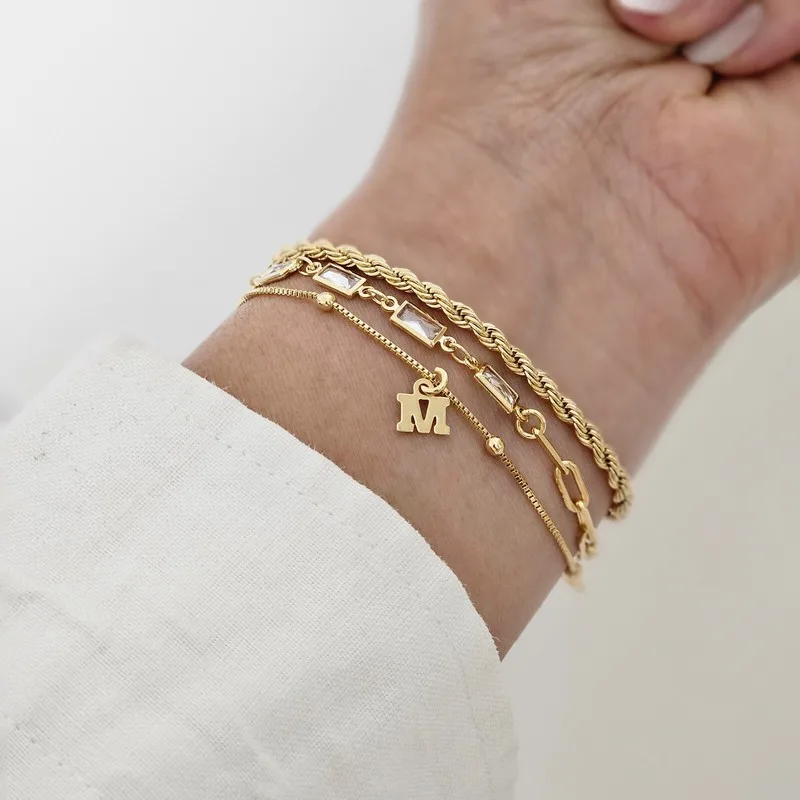
A woman buys her sister a delicate gold bracelet in November. By February the shine has gone patchy at the clasp, then dull along the whole underside, and by summer the bracelet lives in a drawer as a small, quiet embarrassment. Nothing about the listing lied, exactly. It said "gold bracelet." It simply relied on the buyer not knowing that "gold" on a product page can mean five different constructions with five very different lifespans.
The vocabulary is the whole game in jewelry buying. Plated, filled, vermeil, solid: these are not marketing flavors, they are physical descriptions of how much precious metal is present and how it is attached. Learn what the four terms mean and you can predict, before you buy, whether a piece will survive daily wear, occasional wear, or barely any wear at all.
The Short Answer
Gold-plated means a very thin electroplated layer over base metal: fine for occasional wear, not for daily. Vermeil is that same plating done thicker over sterling silver, a meaningful upgrade. Gold-filled has a much heavier gold layer mechanically bonded to the base and handles years of daily wear. Solid gold is the same metal all the way through and lasts indefinitely. For an everyday gift, gold-filled is the sweet spot; for an heirloom, solid.
The Four Constructions, Decoded
Plated jewelry starts with a base metal, commonly brass or copper, and deposits a whisper-thin layer of gold onto it by electroplating. The layer can be dramatically thin, especially on pieces described as "flash plated," and it sits on the surface the way paint sits on a wall. Friction, sweat, perfume, and water all work on it. When it goes, the base metal shows through, and some base metals react with skin along the way.
Vermeil is a regulated step up rather than a different technology. To be sold as vermeil in the United States, a piece must have a sterling silver base with a gold layer of at least ten karats and at least 2.5 microns thick. Two things improve at once: the plating is substantially thicker than typical fashion plating, and the metal underneath is silver, so even eventual wear-through exposes something skin-friendly rather than a reactive base metal.
Gold-filled is the term that confuses people most, because it sounds hollow and is actually the most robust of the three layered options. A thick sheet of gold alloy is bonded to a brass core with heat and pressure, and under the common US standard the gold must make up at least one twentieth of the piece's total weight. That is many times the gold of even good plating. You will see markings like "14/20 GF," which reads as 14-karat gold at one twentieth of the weight. With reasonable care, gold-filled pieces routinely handle daily wear for years.
Solid gold is exactly what it says, with karat describing purity: 24k is pure gold, 18k is 75 percent, 14k roughly 58 percent, 10k about 42 percent. Lower karats are harder and more scratch-resistant because of the alloying metals; higher karats are richer in color and softer. Solid pieces can be resized, repaired, re-polished, and inherited, which is why they anchor the heirloom end of the market. Sterling silver runs parallel to all of this as its own honest material: 92.5 percent silver, prone to tarnish, but tarnish polishes off because it is a surface reaction, not a layer wearing away.
Match the Metal to the Person
The right construction depends less on budget than on how the piece will live. Ask three questions about the recipient.
How often will they wear it? Daily-wear items, the necklace that never comes off, the small hoops worn to work, punish thin plating quickly. For anything intended as a constant companion, gold-filled or solid is the honest minimum. A statement piece worn a few evenings a year can be plated without guilt.
Do they have reactive skin? If earlobes or wrists have ever gone itchy or red with fashion jewelry, the likely culprit is nickel or another alloying metal in the base. Sterling, vermeil, gold-filled, and solid gold in higher karats are the safer lanes. This single consideration disqualifies bargain plated pieces for a surprising number of people.
Will it meet water? Showers, pools, dishwashing, and gym sweat are the fastest routes to dead plating. Someone who will not remember to take jewelry off should get metal that forgives them. Gold-filled tolerates the occasional forgotten shower; plating does not.
Answer those three and the decision usually makes itself, whether you are shopping gifts for her or building toward an anniversary piece.
What to Look For (and What to Skip)
Worth trusting in a listing:
- The construction named precisely: "14k gold-filled," "vermeil over sterling," "925 silver," not just "gold"
- Markings described or photographed, such as 925, 14/20 GF, or a karat stamp
- A stated base metal for plated pieces, ideally with "nickel-free" spelled out
- Care instructions, which signal a seller who expects the piece to be worn for years
- Close-up photos of clasps and edges, where quality differences show first
Reasons to pause:
- The word "gold" with no construction term anywhere in the listing
- "Gold tone" or "gold color," which are admissions that no gold is present
- Waterproof claims on plated jewelry, which physics does not support
- Prices that would be implausible for the stated material, since solid gold priced like costume jewelry is not solid gold
- Listings that dodge direct questions about base metal or thickness
Budget Reality
Think in tiers rather than dollar figures. The entry tier is honest plated and sterling pieces: real pleasure for occasional wear, and a sensible lane for trend-driven styles that may not be loved in three years. The solid middle tier is vermeil and gold-filled, where a modest additional spend buys years of daily wear instead of months, easily the best value-per-wear in the whole market and still reachable for many personalized and everyday styles. The heirloom tier is solid gold and fine silver work, where you are paying for metal that can be repaired, resized, and passed down. The common error is not overspending or underspending; it is mismatching, paying heirloom prices for a trend piece or entry prices for a daily-wear gift.
Mistakes People Make
- Judging by appearance on day one. Fresh plating and solid gold look identical in photos. Read the construction, not the picture.
- Assuming "hypoallergenic" is regulated. The term is marketing shorthand with no enforced standard; the reliable signal is a named material like sterling, gold-filled, or 14k solid.
- Gifting plated jewelry to someone who never takes jewelry off. The recipient's habits, not the occasion, should pick the construction.
- Storing everything in a pile. Chains scratch plating and tangle; a simple habit of separate pouches extends every tier's life, and it is worth saying so in a gift note.
- Buying high karat for durability. It works the other way: 14k outwears 18k on hands and wrists because the alloy is harder. Save 18k and above for pieces that take less abuse.
Is gold-filled jewelry worth it compared to gold-plated?
For anything worn regularly, yes, and it is not close. Gold-filled construction bonds a gold layer many times thicker than electroplating, held to a weight standard rather than a cosmetic one. Plated pieces suit occasional wear and fast-moving trends; gold-filled suits the everyday necklace or hoops that will meet sweat, sleeves, and the odd shower. The price difference is usually modest relative to the lifespan difference.
What does vermeil actually mean on a listing?
Vermeil is a regulated term in the United States: sterling silver as the base metal, plated with gold of at least ten karats to a thickness of at least 2.5 microns. It is thicker than typical fashion plating and sits on a precious-metal core, so wear-through reveals silver rather than a reactive base metal. Treat it as a genuine middle tier, gentler on skin and budget alike.
Can you shower with gold-filled jewelry?
Occasionally forgetting is forgivable; making it a habit is not ideal. The gold layer on filled pieces is thick enough that water alone will not strip it, but soap film dulls shine and hot water accelerates wear at friction points like clasps. Chlorinated pools and sulfur-rich hot springs are harsher and worth avoiding for any construction short of solid gold. A quick wipe after wear does more than any rule.
How can I tell what a piece of jewelry is really made of?
Look for stamped markings: 925 for sterling, a karat mark like 14k for solid gold, or 14/20 GF for gold-filled. Listings for genuine pieces almost always name the construction precisely, because it justifies the price. Absent markings and absent terminology, assume plated at best. A jeweler can test metal definitively, which is worth doing before resizing or repairing anything believed to be solid.
Reviews & comments
See every public review for this Journal story and leave your own note.