 All stories


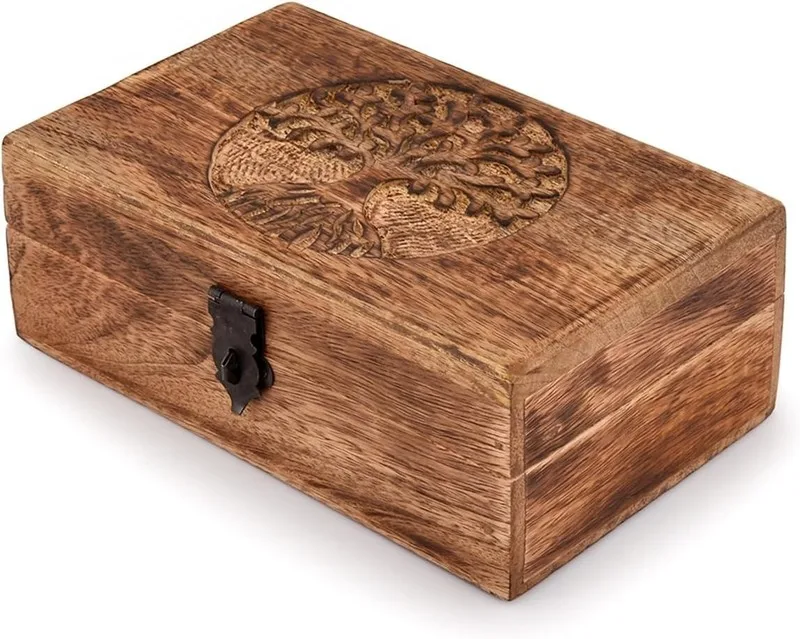
The most forward-looking trend in gifting right now is, on its face, the least modern idea imaginable: buy one good thing, keep it for decades, hand it to someone younger with a story attached. After years in which gifts got cheaper, faster, and more disposable, a growing share of shoppers are deliberately reversing course, hunting for objects built to outlive the giver. Keepsake boxes, engraved wooden pieces, silver baby sets, commissioned art: the common thread is not price. It is intent.
You can see the shift without any market report. Listings increasingly lead with materials rather than trends. Engraving and personalization options have moved from afterthought to headline. Buyers ask sellers whether a finish can be repaired, whether a box can be re-lined, whether a print will fade. Those are not the questions of someone filling a gift bag. They are the questions of someone starting an heirloom, and this piece is about how to do that deliberately instead of accidentally.
The Short Answer
An heirloom is made by three things: a material that ages well, a design plain enough to survive changing taste, and a story the family actually knows. Solid wood, natural fibers, real silver, and archival art qualify; particleboard, plastic, and trend-driven styling do not. Buy the best construction you can within reason, personalize it with names and dates rather than jokes, and write down why you gave it. The writing-down is the step almost everyone skips.
Why Durable Gifts Are Having a Moment
Several currents feed the revival, and none of them requires statistics to observe. The first is simple fatigue. Anyone who has watched a well-intentioned gift break, pill, or peel within a year becomes more receptive to the opposite idea. Disposability was tolerable when it felt like value; it stops feeling like value the third time you rebuy the same item.
The second is the sustainability instinct working its way into gifting. Many people who would not call themselves environmentally motivated still feel a quiet resistance to giving something destined for a landfill. One object kept for thirty years sidesteps the whole question, which makes durable gifting one of the rare cases where the ethical choice and the sentimental choice are the same purchase.
The third current is generational. Households formed in a fully digital era own fewer physical anchors: fewer albums, fewer letters, less silverware inherited from anyone. When nearly everything you touch is replaceable, the few things that are not become disproportionately meaningful. A wedding, a birth, a milestone anniversary now prompts a deliberate search for something permanent precisely because permanence has become scarce. The interest in keepsakes and mementos is, at bottom, an interest in owning at least a few objects with memory in them.
What Actually Makes Something Heirloom-Grade
Strip away the romance and heirloom-worthiness is a checklist of physical and emotional properties.
Material comes first. Solid hardwood ages into character; veneered particleboard ages into flaking. Full-grain leather develops patina; bonded leather delaminates. Sterling silver tarnishes and polishes back forever; plated finishes wear through once. Archival, pigment-based printing on quality stock, the standard behind giclée reproduction, resists fading in ways ordinary poster printing does not. None of this requires expertise to check; it requires reading the materials line and refusing vagueness.
Repairability comes second and is the most overlooked property. An heirloom is not an object that never breaks. It is an object worth fixing when it does. Solid wood can be sanded and refinished. A hinge can be replaced. Real jewelry can be re-set. If a thing cannot plausibly be repaired by anyone, it cannot honestly be called permanent.
Design restraint comes third. Whatever is aggressively fashionable now will look dated in fifteen years and charming in fifty, but the family has to keep it through the awkward middle. Plain forms, classic proportions, and personalization limited to names and dates survive that valley far better than trend-driven styling and jokes that will need explaining.
The story is the fourth ingredient and the one that does the emotional work. Objects do not carry meaning; people attach it. A wedding gift becomes an heirloom the day someone writes down who gave it and why, and stays one only as long as the family keeps telling it.
A Decision Framework: The Thirty-Year Test
When you are weighing a candidate gift, run it through four questions in order. Will the material itself survive three decades of ordinary handling? If not, stop. Would a person with completely different taste still tolerate it on a shelf? If not, choose a plainer variant. Can it be repaired by a normal craftsperson, not just the original maker? If not, weigh how likely damage is. And finally, is there a natural place to attach the story, an engraving, a card slot, a lid interior, a backing? That last question is where personalization earns its keep: a name and a date turn an object into a record. This is also where custom work shines, since a commissioned piece from portraits and custom art has the story built into its existence.
What to Look For (and What to Skip)
Signals of a piece built to last:
- Named materials: a wood species, a silver standard, a leather grade, an archival paper weight
- Joinery, hinges, and clasps visible in photos rather than hidden
- Engraving or personalization offered as a permanent process, not a printed sticker
- Sellers who answer repair and care questions directly
- Weight and dimensions listed, since honest mass is hard to fake in solid materials
Signals of a keepsake that will not keep:
- The words "wood-style," "leather-look," or "silver tone"
- Personalization applied as vinyl or surface print on a piece meant for decades
- Trend-heavy styling, slogans, or pop-culture references doing the emotional work
- No care instructions of any kind
- Listings that never mention what the object is actually made of
Budget Reality
The reassuring truth is that heirloom-grade and expensive are loosely correlated at best. The entry tier is small solid-material keepsakes: an engraved hardwood box, a silver-plated first-curl set for a newborn, a well-bound journal. Modest money, genuine permanence, and the picks under this story sit in this range. The middle tier adds size and craft: substantial jewelry boxes, quality nursery pieces, framed archival prints, commissioned art of the family or a beloved home. The heirloom-priced tier, solid silver, fine furniture, significant original art, is real but optional; a family treasure does not need to start as a financial one. What actually disqualifies a gift is not a low price. It is construction that cannot survive the assignment.
Mistakes People Make
- Buying for the moment instead of the decades. A gift themed entirely to the current occasion ages into clutter. Personalize with names and dates, and keep the styling quiet.
- Skipping the provenance note. Unrecorded stories die within a generation. Put a written card inside the box or on the frame back: who, when, why. Two minutes of writing is what separates an heirloom from an old object.
- Confusing fragile with precious. A delicate thing that cannot be displayed or touched gets stored, and stored things get forgotten. Favor pieces sturdy enough to live in the open.
- Personalizing with humor. The joke lands today and baffles a grandchild. Save wit for the card; put facts on the object.
- Ignoring the recipient's actual life. A large keepsake chest given to someone in a small apartment becomes a burden, not a legacy. Permanence includes fitting into the home it must survive in.
What kinds of gifts make the best heirlooms?
Objects that combine durable material, quiet design, and a natural place for a story: solid wood keepsake and jewelry boxes, real silver pieces, engraved items marking births and marriages, archival-quality custom art, and well-made textiles like quilts. The occasion matters less than the construction. A modest engraved box from a milestone birthday can outlast an expensive but trend-driven purchase by fifty years.
How do I start an heirloom tradition without spending a fortune?
Start with one small object of honest material at the next milestone: a newborn's engraved memory box, a hardwood box for wedding letters, a silver keepsake for a christening. Add a written note recording the giver, the date, and the reason, and store it with the object. The tradition is created by the record and the retelling, not the price. Repeat at the next milestone.
Is engraving worth it on a keepsake gift?
Usually yes, with one rule: engrave facts, not fashion. Names, dates, initials, and short phrases age perfectly because they are the story itself. Long quotes, jokes, and current slang date quickly and can make a permanent object feel stuck in its year. Choose a permanent process cut into the material rather than surface printing, which can wear off long before the object fails.
How should heirloom gifts be stored and cared for?
Follow the material. Solid wood wants stable humidity and an occasional oil or wax, away from radiators and direct sun. Silver tarnishes in open air but polishes back; anti-tarnish cloth slows it. Textiles want clean, dry, acid-free storage. Paper and photographs want acid-free sleeves out of sunlight. Most importantly, keep the provenance note with the object, since the story is the part that cannot be restored once lost.
Reviews & comments
See every public review for this Journal story and leave your own note.