 All stories


Ask almost anyone what to buy for a person who loves to bake and the answer arrives instantly: a stand mixer. It is the default baking gift, and it has the usual problem of defaults. Serious hobby bakers tend to own one already, and the ones who don't usually have strong opinions about exactly which model they want, in which color, at what moment their budget allows it. A purchase that size is one the baker generally wants to make themselves.
The better news is that baking is a hobby with unusually deep gift potential once you step past the appliance shelf. Bakers work with dozens of small tools, burn through ingredients constantly, and give away most of what they make. Each of those three facts points to a whole category of gifts that cost less than a mixer and land considerably better.
Start With What Their Counter Tells You
Before you buy anything, think about what you have actually seen in this person's kitchen. A baker's counter and drawers are a fairly honest record of their habits. Someone who bakes bread has a different set of needs than someone who decorates cakes, and a cookie person is different again. If you have never watched them bake, ask someone who lives with them, or ask the baker directly what they reach for most and what annoys them. Bakers are rarely shy about their frustrations with their own equipment.
The two most common baking-gift mistakes both come from skipping this step. The first is duplication: giving a rolling pin to someone who owns three. The second is mismatch: giving sourdough equipment to someone who bakes brownies. Ten minutes of observation or one honest question prevents both.
Upgrade the Tools They Use Every Time
Most hobby bakers assembled their kit gradually and cheaply, one grocery-store gadget at a time, and much of it is flimsier than they would like. That is the opening for one of the most reliable gift moves there is: take something they already use every single session and replace it with a version that is genuinely pleasant to hold. A solid metal bench scraper instead of a bent plastic one. A digital scale that measures in grams and doesn't shut itself off mid-recipe. An oven thermometer, because home ovens lie. Reusable silicone baking mats. Heavy sheet pans that don't warp with a bang in a hot oven.
None of these are glamorous, and that is exactly the point. They are the tools a baker touches weekly for years, and the difference between a cheap one and a good one is felt every time. When you are judging quality in this category, weight and material are the honest signals: sturdy metal over thin, one-piece construction over glued handles, plain and washable over novelty shapes. The kitchen and dining category is the natural place to browse with this list in mind.
Consumables Are Quietly Excellent Gifts
Bakers use up ingredients at a rate that surprises people who don't bake, and many of them hesitate to buy the premium version of a staple for themselves because the everyday version technically works. Real vanilla rather than imitation, good baking chocolate, interesting specialty flours, fresh whole spices, quality cocoa. That hesitation is precisely what makes these things good gifts: you are giving a small luxury the person wants, uses, and would talk themselves out of at the store.
Consumables also solve the duplication problem completely, since they get used up, and they scale to any budget. A thoughtfully chosen ingredient sits comfortably in gifts under $30 territory, and a small collection of them makes a generous bundle. Browsing food and drink with a specific baker's habits in mind works better than grabbing a generic gourmet basket, which tends to be padded with things nobody asked for.
Help Them Share What They Bake
Here is the fact about hobby bakers that gift-givers overlook most often: the majority of what they make leaves the house. It goes to coworkers, neighbors, school events, and friends. Which means anything that makes transporting and presenting baked goods easier is a gift aimed straight at the center of the hobby. A cake carrier that actually seals. Sturdy tins and boxes for cookies. A simple cake stand for the bakes that stay home. Twine, labels, and parchment in the quantities a frequent baker actually goes through.
These gifts have a pleasant side effect: they gently encourage more baking, because sharing becomes easier. You may find yourself a beneficiary.
Add a Personal Layer
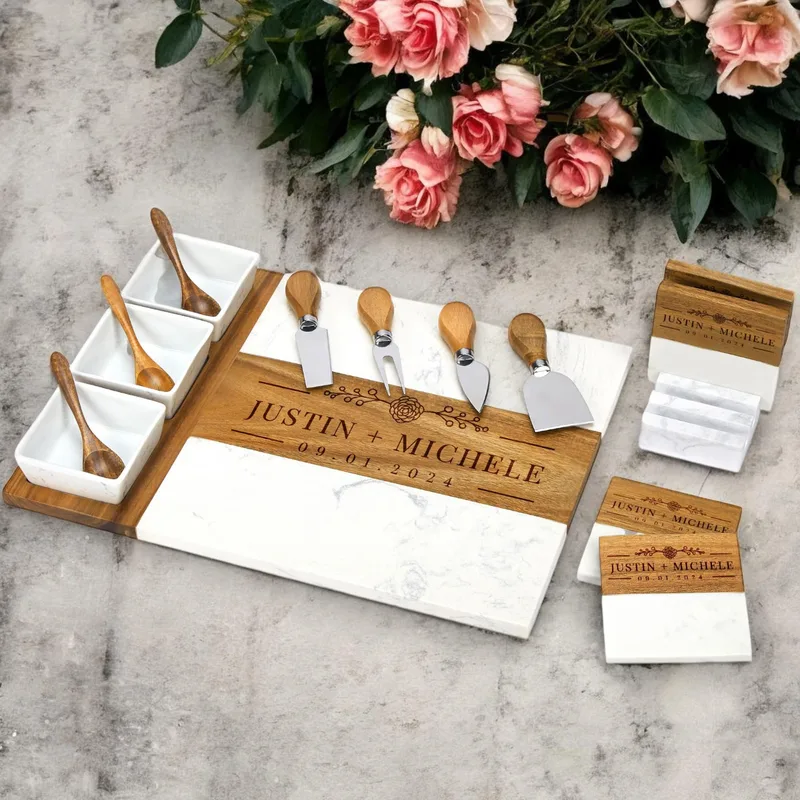
Because baking is an identity as much as an activity, it takes personalization well. An apron chosen for their actual taste rather than a novelty slogan, recipe cards printed with their name, or a well-loved family recipe reproduced in a form worth framing all connect the gift to the person rather than just the hobby. The personalized gifts category is a reasonable starting point.
One caution: the baking-gift world is full of joke items, and most bakers already own the mug about butter. A personal detail lands better than a generic joke. If the person is proud of one signature bake, anything that references that specific thing, even just a card, will outperform a drawer full of novelty spatulas.
Leave Room for Them to Grow
The last dependable category is the gift that points forward. A serious baking book in a genre adjacent to what they already do gives a bread baker a reason to try pastry, or a cake decorator a reason to attempt laminated doughs. If they learn better by doing, a class, in person or online, does the same job. The trick is adjacency: close enough to their current skills to be usable, new enough to be interesting. A book about exactly what they already master flatters them but teaches little, and a book about something wildly outside their interests gathers dust. The books category rewards a little knowledge of what is already on their shelf.
What should I get a baker who already seems to have everything?
Focus on consumables and upgrades rather than new gadgets. Premium versions of ingredients they use constantly, like real vanilla or good chocolate, never duplicate anything. Alternatively, replace a worn everyday tool, such as a scale, bench scraper, or sheet pan, with a noticeably sturdier version. Bakers who own everything usually own a cheap version of something they would love to have in a better one.
Are ingredient gifts too small to give on their own?
Not if they are chosen specifically. A single bottle of excellent vanilla given to someone who bakes weekly is a considered gift, because it shows you know how fast they go through it and that they would hesitate to buy it themselves. If the occasion calls for more volume, bundle two or three premium staples together rather than reaching for an unrelated filler item.
How do I avoid buying baking tools someone already owns?
Look, or ask. A glance at their kitchen tells you what they use, and a question to a partner or housemate fills the gaps. If neither is possible, choose categories where duplication doesn't matter: ingredients get used up, and containers for sharing baked goods are useful in multiples. Avoid guessing at specialized equipment, since that is where mismatches happen most.
Is a stand mixer ever a good gift?
Occasionally, but usually only when the baker has explicitly named the exact model they want and the occasion is large enough to warrant it, like a wedding or a milestone birthday, and ideally as a group gift. Chosen unilaterally, a big appliance risks duplicating one they own or missing their preference. For most occasions, several smaller well-chosen gifts serve the same budget better.
Reviews & comments
See every public review for this Journal story and leave your own note.