 All stories


The five love languages have been stretched to explain everything from office conflict to why your dog ignores you, so a little skepticism is fair. It is a framework from a 1990s marriage book, not a law of nature, and plenty of people do not fit neatly into one box. But strip away the quiz culture and one observation survives contact with real life: people register care through different channels. Some people melt over a wrapped box and barely notice that you did the dishes for a week. Others would trade every wrapped box they have ever received for one uninterrupted afternoon.
Here is what goes wrong when people ignore that: they give gifts in their own language instead of the recipient's. The planner who loves surprises throws a surprise party for someone who hates being surprised. The person who feels loved through objects buys a beautiful object for someone who wanted help, not things. The gift is genuinely thoughtful, and it still lands flat, because it was aimed at the wrong channel. This guide treats love languages the way a good editor would: as a sorting tool for your attention, nothing more.
The Short Answer
Buy for how the recipient notices care, not for how you show it. If they light up at wrapped objects, give one specific, personal thing. If they praise people who help, remove a chore from their life. If they guard their calendar for people they love, give a plan with a date on it. If words move them, make the message the gift. If they are physically affectionate, give comfort they will touch daily. One lens, one gift, done.
Skip the Quiz, Watch the Thank-Yous
You do not need to make anyone take a test. People broadcast their language constantly through what they thank others for and what they complain about. The stories someone retells are the clearest tell of all: if your sister still talks about the time a friend drove two hours to help her move, she is telling you what registers. If your dad has kept every card anyone ever wrote him, that is not clutter, that is data.
- Listen to gratitude. "She actually remembered" points toward gifts. "He just showed up and fixed it" points toward acts of service.
- Listen to complaints. "We never do anything together anymore" is a quality-time flag, not a request for a nicer present.
- Look at what they keep. Saved letters and ticket stubs suggest words and time; a shelf of displayed presents suggests the objects themselves matter.
- Notice how they treat you. Most people default to giving in their own language, so how they show care is often how they want to receive it.
Translating Each Language Into an Actual Object
The framework only helps if it survives contact with a checkout page, so here is the honest translation. For words-of-affirmation people, the gift is a carrier for a message: an engraved piece, a custom illustration with a line of text that means something, or a plain object elevated by a letter that took you an hour to write. For quality-time people, the gift is a committed plan, and the object you hand over is a token of it: tickets, a booked class, a printed itinerary. Vague vouchers do not count; a date does.
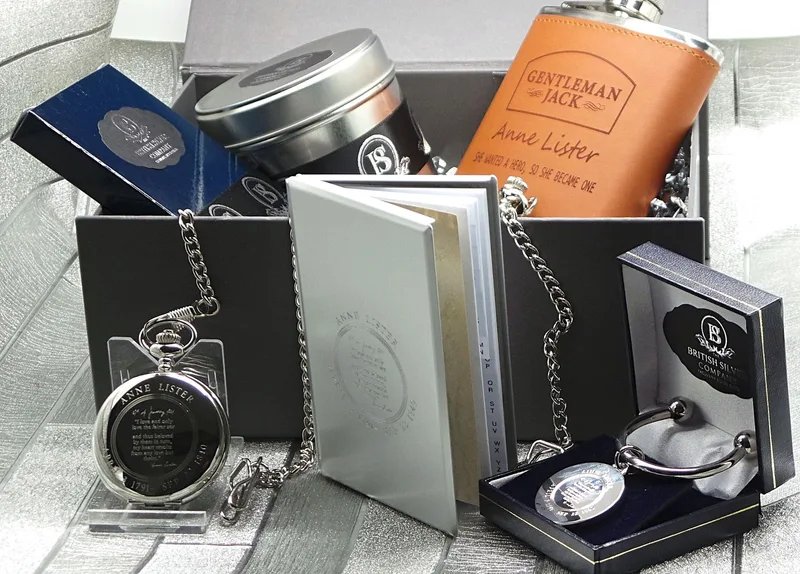
For acts-of-service people, the best gift removes friction from their week. That can mean doing something yourself, but it can also be an object chosen to erase a specific recurring annoyance they have mentioned. For people whose language is receiving gifts, the object itself carries the meaning, and specificity is everything; this is where personalized gifts earn their keep, because a one-of-one item proves the thought in a way a generic bestseller cannot. And for physical-touch people, think daily contact: a robe, a heavy blanket, a hoodie in their actual size, things their hands land on every day. The catalog picks under this story cut across several of these lanes, which is the point: the same budget can serve very different languages.
What to Look For (and What to Skip)
Look for:
- One clear language per gift, so the gesture reads cleanly instead of hedging.
- A specific reference to the recipient: their initial, their photo, their inside joke, their pet.
- Daily placement. Gifts that live on a keyring, a desk, or a body get re-noticed constantly.
- Permanence that matches the sentiment. A message worth engraving deserves a material that lasts.
- Evidence of attention they can verbalize to someone else later, because retelling is how a gift keeps working.
Skip:
- Merchandise about love languages themselves. A mug that jokes about quality time is a gift about the framework, not about the person.
- Gifts that assign the recipient homework, like a craft kit for someone who has never crafted.
- Generic engraving. A name added to a random object is customization; it is not the same as knowing someone.
- Anything you chose mainly because you would love to receive it. That is the core failure this whole approach exists to prevent.
The Budget Question the Framework Quietly Answers
One underrated feature of thinking in languages is that it breaks the link between spending and impact. At the entry level, a small object paired with a genuinely effortful message can outperform an expensive default, especially for words and service people; there are plenty of worthy options among gifts under 30 dollars. The solid middle tier is an item made or modified for this specific person, where the cost buys personalization rather than brand prestige. The heirloom tier is commissioned work, like a couple caricature or portrait built around the two of you, which suits milestone moments precisely because it cannot be repeated for anyone else. Pick the tier the occasion deserves, then let the language pick the gift.
Mistakes People Make
- Buying in their own language. The chronic gifter gives objects to a quality-time partner and wonders why the reaction is polite. Fix: run every idea through the recipient's lens before checkout.
- Hedging with a basket that covers all five languages. Spreading the budget across five small gestures dilutes each one. Fix: one confident gesture beats five hedges.
- Treating "receiving gifts" as the shallow language. It is not about materialism; it is about tangible proof of attention. Fix: give these people something specific enough to prove you were paying attention, and skip the apologetic gift card.
- Leaving quality-time gifts vague. A promise to "do something soon" is a chore you just assigned them. Fix: attach a date, a booking, or a printed plan before you hand anything over.
Do love languages actually matter for gift-giving?
The research behind the framework is thin, and psychologists debate whether five fixed categories describe anyone well. But you do not need the theory to be rigorous for the habit to be useful: it forces you to think about how the recipient perceives care before you spend money. Used as an attention-sorting tool rather than a personality diagnosis, it reliably produces better gift decisions than shopping by occasion alone.
What should I get someone whose love language is quality time?
Give a plan, not just a thing. Book something concrete, put the date in both calendars, and hand over a physical token of it so there is something to unwrap. The token can be modest: printed tickets in a card, or a small object connected to the outing. The failure mode to avoid is the open-ended voucher, which transfers all the planning work to the person you meant to treat.
Is a gift card ever a good love-language gift?
It can be, for the right person and framing. Someone who genuinely loves choosing their own things may prefer a gift card to a guess, especially paired with a short note explaining why you chose that store for them. But for people whose language is receiving gifts, a bare gift card outsources exactly the part they value: the evidence that you knew what they would love. Add specificity or choose differently.
How do I find someone's love language without asking?
Watch three things over a couple of weeks: what they thank other people for, what they complain about missing, and what they have kept for years. Saved cards point to words, a displayed shelf of presents points to gifts, and stories about people who showed up point to service or time. Most people also give in their own language, so their habits as a giver are a strong clue.
Reviews & comments
See every public review for this Journal story and leave your own note.