 All stories


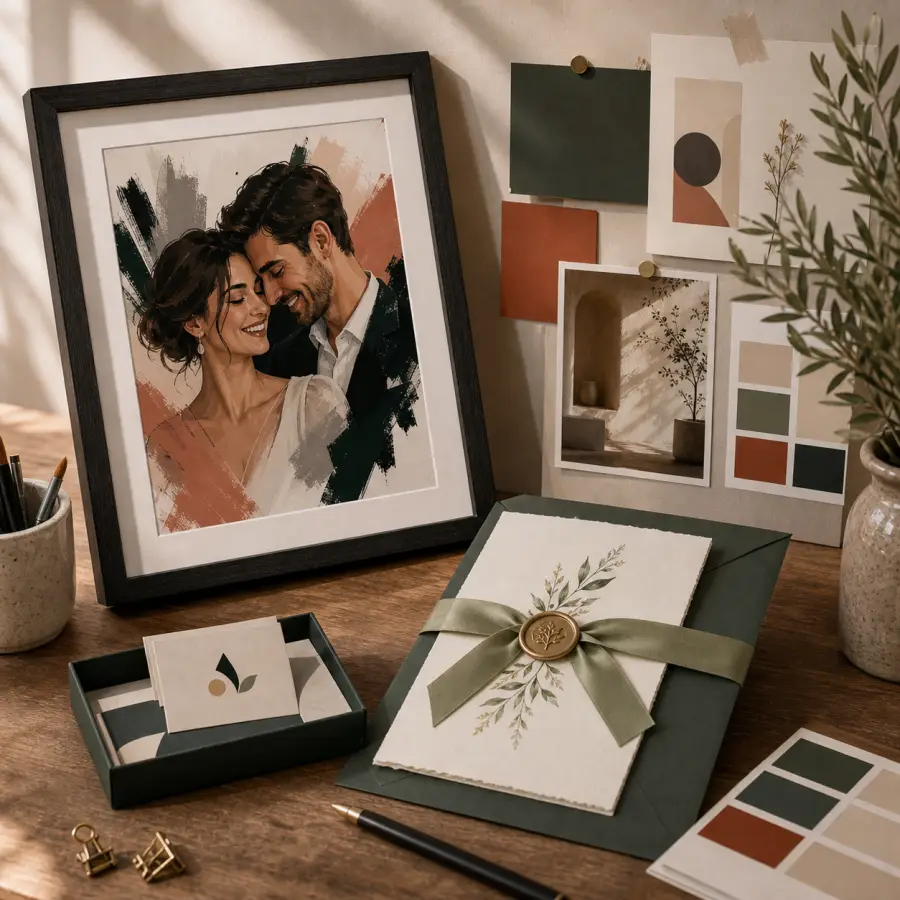
There is a specific drawer — sometimes a closet shelf — where gifted art goes to be forgotten. The print arrived rolled in a tube, the recipient loved it, said so sincerely, and then set it aside "until I get it framed." That was fourteen months ago. Nobody in this story did anything wrong; the gift simply arrived with homework attached, and homework loses to everything.
If you are giving art — a custom portrait, a caricature, a print, anything on paper — the framing question is not a detail to leave for later. It is the difference between a gift that lives on a wall and a gift that technically exists. The fix is rarely expensive. Mostly it is a matter of ordering the right size, choosing materials on purpose, and deciding up front whose job the frame is: yours or theirs. This guide makes the case that it should almost always be yours.
The Short Answer
Order the artwork in a standard frame size — 5x7, 8x10, 11x14, 16x20 — and give it already framed, or bundle an off-the-shelf frame in the same box. Choose acrylic glazing if the frame ships or hangs in a kid's room, glass for scratch resistance. For anything meant to last decades, insist on acid-free mats and backing. Then remove the final excuse: include the hook. A framed gift goes on the wall that week; a rolled print enters a queue it may never leave.
Standard Sizes Are the Whole Game
Frames are cheap and plentiful in a handful of standard sizes, and nearly arbitrary in price outside them. A print ordered at 8x10 or 11x14 drops into an inexpensive ready-made frame the day it arrives. A print ordered at some lovely nonstandard dimension needs custom framing — an errand, a wait, and often a bill that exceeds the artwork. Same art, wildly different odds of reaching the wall.
So when you commission custom art or buy a print, treat size as a framing decision, not just an art decision. Ask for a standard print size, or pick the closest standard size up and plan on a mat. A mat — the cardboard border between art and frame — is the honest cheat code here: it bridges any smaller artwork into any larger standard frame, adds a gallery-grade finished look, and keeps the art from touching the glazing, which paper conservators want anyway. An 8x10 artwork matted into an 11x14 frame reads more considered than the same piece framed edge-to-edge.
Digital files deserve one extra sentence of care: confirm the aspect ratio before printing. A file proportioned for 8x10 will lose heads or margins if printed at 11x14 without adjustment, so decide the final framed size first and print to it.
Glass, Acrylic, and What the Mat Is Quietly Doing
Glazing — the clear sheet over the art — is a real choice, not packaging. Glass resists scratches and sits flat but is heavy and shatters, which matters for shipping, large frames, and anything hung where a door or a child might catch it. Acrylic (plexiglass) is light and shatter-resistant — the default for shipped gifts and kids' rooms — but scratches more easily, so it should be cleaned with a soft cloth, never dry paper towel. Both come in versions with UV-filtering properties, worth seeking out for pieces facing a bright window, since sunlight fades inks and papers over time.
Behind the art, materials decide how the piece ages. Acid-free or "archival" mats and backing boards exist because ordinary acidic cardboard slowly yellows the paper it touches — the brown halo you have seen on old framed photos. For disposable decor it hardly matters; for a custom portrait meant to outlive the occasion, acid-free is the single cheapest longevity upgrade there is. On print quality itself, one term worth knowing: giclée means a pigment-based inkjet print on archival stock — the standard for art prints that are expected to hold color for decades rather than years.
Framed, Frame-Ready, or Frame Separately: A Decision Framework
Give it framed when you know the recipient's space even loosely. The taste risk is smaller than people fear: a simple frame in black, white, natural wood, or thin gold metal is neutral in nearly any home. This is the strongest move for housewarming gifts and finished pieces, because it converts "art" into "done."
Give it frame-ready when the art is standard-sized and you are shipping far or the style genuinely divides opinion. Frame-ready means the recipient's remaining job is one purchase in one common size — or none, if you tuck a ready-made frame into the same parcel. Inexpensive frame sets, like the multi-packs in the picks under this story, make this nearly effortless and set up a small gallery wall besides.
Frame separately — as in, let them handle it — only when the piece is large, valuable, or destined for a specific designed room where the frame is part of the recipient's vision. In that case, say so explicitly when you give it, so the tube does not read as an unfinished gift.
What to Look For (and What to Skip)
Look for:
- Prints offered in standard sizes: 4x6, 5x7, 8x10, 11x14, 16x20.
- Acid-free mat and backing for anything sentimental.
- Acrylic glazing on shipped or kid-adjacent frames; glass where scratches worry you more than breakage.
- Frames with hanging hardware installed, plus both hooks and easel backs on small sizes.
- Giclée or pigment-print wording on art prints meant to last.
Skip:
- Nonstandard print dimensions unless you are budgeting for custom framing.
- Frames that grip the art directly against the glazing with no mat, for anything meant to age well.
- Ornate statement frames when you do not know the recipient's taste — neutral profiles win.
- Hanging plans involving direct sunlight, bathroom humidity, or the wall above a radiator, all of which punish paper art.
Budget Reality
The entry tier — a standard-size print in an off-the-shelf frame — already achieves the goal: art on a wall instead of in a drawer, and no one is grading the molding. The solid middle adds a proper mat, acid-free materials, and better glazing, and this is where most gift pieces should live; it looks custom without custom prices. The heirloom tier is full custom framing with conservation materials and UV glazing, justified for original art, milestone pieces, and anything the family intends to keep for a generation. Spend on permanence in proportion to how permanent the art actually is.
Mistakes People Make
- Gifting a rolled tube with no plan. Fix: frame it, or bundle a standard frame — the tube-to-wall conversion rate is grim.
- Printing at a size no frame comes in. Fix: decide the frame size first, then order the print to fit it, matting up if needed.
- Framing a keepsake in acidic materials. Fix: the words to look for are acid-free or archival, on both mat and backing.
- Hanging art in punishing spots. Sun fades it, bathroom steam warps it. Fix: interior walls out of direct light; put something replaceable in the bathroom.
- Hanging it too high. The habit of hanging art at standing eye level pushes pieces awkwardly up the wall. Fix: the gallery convention of centering art around 57 inches from the floor looks right in most rooms — lower than instinct says, especially above furniture. A picture-hanging strip or two also spares renters the drill and removes the last excuse a home decor gift ever has.
What size should I order a print so it is easy to frame?
Pick from the standard ladder — 4x6, 5x7, 8x10, 11x14, 16x20 — and ready-made frames become plentiful and cheap. If the artwork's proportions do not match, size up to the next standard frame and use a mat to bridge the difference; the matted look reads more finished anyway. Deciding the frame size before ordering the print avoids cropped compositions and custom-framing bills.
Should I choose glass or acrylic glazing?
Choose acrylic when the framed piece ships, hangs in a child's room, or is large — it is light and shatter-resistant, though it scratches more easily and wants a soft cloth for cleaning. Choose glass for scratch resistance and a flatter look on pieces that will hang undisturbed. For art facing bright windows, seek UV-filtering versions of either, since sunlight is the main thing that fades prints.
How do I flatten a print that arrived rolled?
Unroll it gently and let it relax face-up, then leave it under clean, even weight — large books over a protective sheet of plain paper — for a day or two. Avoid creasing it backward against the curl, which can crack inks and leave permanent lines. Light remaining curl disappears once the print is matted and framed, since the mat and backing hold it flat.
Where should custom art not be hung?
Three places do most of the damage: walls in direct sunlight, which fades inks and yellows paper; bathrooms, where humidity swings warp and ripple works on paper; and directly above radiators or heat vents, which dry and buckle them. Hang meaningful pieces on interior walls in even, indirect light, and reserve the risky spots for replaceable decor rather than one-of-a-kind art.
Reviews & comments
See every public review for this Journal story and leave your own note.