 All stories


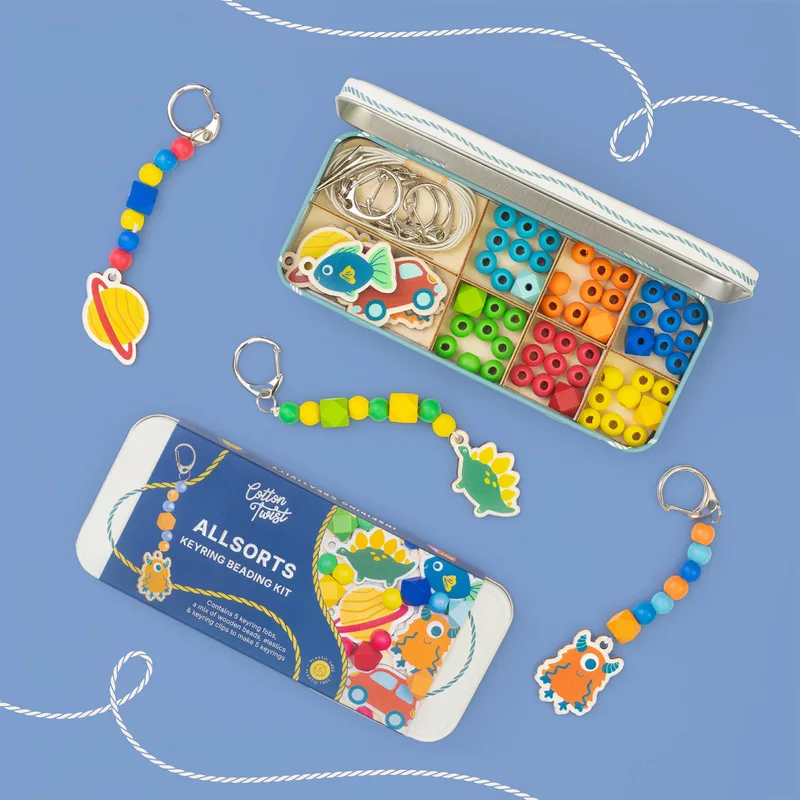
When was the last time you finished something? Not closed a tab, not cleared an inbox that refilled overnight, but completed a physical object that stayed done? For a lot of adults the honest answer is years, and that answer explains one of the quieter shifts in gifting: grown adults are buying craft kits again, for themselves and for each other, without irony. Candle-making kits, jewelry chain kits, soldering practice boards, embroidery sets that would have looked like a joke gift a decade ago now get given seriously and used enthusiastically.
The knee-jerk explanation is nostalgia, and nostalgia plays a part. But watch what people actually do with these kits and a better explanation emerges: a kit is a pre-packaged evening of absorption with a guaranteed finish line. In a life of endless scrolling and jobs that never resolve, that is not a toy. That is a scarce good. Which also makes kits an unusually smart gift, provided you pick one the recipient will actually complete, and that is where most givers go wrong.
The Short Answer
A craft kit is a gift of time and attention, not an object, so choose it by the recipient's patience and mess tolerance rather than by the finished product's looks. Favor kits that are genuinely complete, promise a first success within one sitting, and produce something usable. A candle kit for the cozy friend, a jewelry kit for the detail-lover, a soldering kit for the tinkerer. Check craft supplies and tools with one specific person in mind.
Why Adults Came Back to Kits
The return is easy to observe and easy to explain without a single statistic. First, screen fatigue is real and widely admitted. People increasingly talk about wanting hobbies that occupy their hands specifically so their phone cannot, and craftwork is one of the few leisure categories that physically blocks scrolling.
Second, a kit removes the two barriers that kill adult hobbies: research and shopping. Starting a craft from scratch means choosing among unfamiliar tools and materials, and most curious adults stall right there. A kit collapses fifty small decisions into one purchase. That convenience matters more to a working adult than it ever did to a bored kid.
Third, kits offer permission to be a beginner. Adults are out of practice at being bad at things, and a kit quietly promises that clumsy first attempts are expected, instructions exist, and the materials budget already includes mistakes. That psychological packaging is half of what you are paying for.
Fourth, the finish line. A kit ends. The candle gets poured, the bracelet gets clasped, the circuit board lights up. Completion is a feeling modern work rarely provides, and people are visibly hungry for it.
The Gift Logic: You Are Giving an Evening
Reframing the kit as an experience changes how you shop. The finished object is almost beside the point; what you are really wrapping is two or three absorbed hours and a small hit of competence. This is why kits work so well for the person who has everything: they do not need another object, but nobody has surplus absorption.
It also makes kits a natural fit for occasions where objects feel wrong. A thinking-of-you gesture for a friend going through a stressful stretch. A winter birthday for someone whose evenings are dark and long. A parents' night in. And because many solid kits are inexpensive, the category is one of the stronger corners of gifts under 30 dollars: the spend is modest but the gift reads as thoughtful, since it required knowing what the person would enjoy doing rather than owning.
One honest caveat: a kit given to the wrong person becomes clutter with a side of guilt. The unopened kit on a shelf is a tiny standing accusation. That is why the matching step below matters more than in most gift categories.
How to Pick a Kit Someone Will Actually Finish
Run through four questions about the recipient, in order.
What is their patience horizon? Some people want results in ninety minutes; others enjoy a project that spans a week of evenings. A candle or simple jewelry kit resolves in one sitting. Embroidery, model-building, or a multi-board soldering kit rewards a longer horizon. Mismatch here is the single biggest cause of abandoned kits.
What is their mess and space tolerance? Melted wax and fragrance oils need a stove and cleanup. Soldering needs ventilation and a surface that can take a scorch mark. Jewelry assembly needs good light and almost nothing else. A beautiful kit that conflicts with a small kitchen or a shared desk will not get used.
Do they want a usable result? Most adults stay motivated when the output earns its keep: candles get burned, bracelets get worn, a practice circuit board is admittedly just practice, which is fine for people motivated by skill rather than product. Match the output type to what the person values.
Have they shown a flicker of interest already? The best kit gifts amplify an existing curiosity, a comment about a candle's scent, an evening spent admiring someone's handmade chain. A kit that answers something the person already said lands as attention, not assignment.
What to Look For (and What to Skip)
Marks of a kit worth giving:
- A contents list specific enough to verify completeness: wicks and their count, wax weight, chain length, component counts
- Everything included except common household basics, with any exceptions stated plainly
- Instructions mentioned and ideally shown in photos, a strong signal the maker expects beginners
- Enough material for more than one attempt, because first tries fail and second tries are where the fun lives
- A first project achievable in a single session
Kits to pass over:
- Vague contents like "accessories included" with no counts or amounts
- Hidden requirements: a heat source, glue, tools, or batteries you discover on opening night
- Kits whose cover photo shows expert-level results a beginner cannot approach, a setup for disappointment
- Age-ambiguous kits that are actually children's products, thin on material and patronizing in tone
- Anything with safety-relevant steps, like hot wax or soldering, that does not bother to include safety guidance
Budget Reality
The entry tier, where the catalog picks under this story sit, covers single-project kits and component bundles: one candle evening, one chain-making session, one practice board. Perfectly credible gifts, especially paired with a card that names the evening you are giving. The middle tier buys better raw materials, more attempts, and often reusable tools, the difference between trying a craft and adopting one. The upper tier is really equipment: proper soldering stations, full jewelry toolsets, bulk wax and fragrance. Skip it for a first gift. If the hobby takes hold, the upgrade becomes your next occasion, and if it does not, nobody is stuck storing a workstation.
Mistakes People Make
- Buying the craft you find charming instead of the one they would. The test is their patience and interests, not your aesthetic. Reread their last few enthusiasms before choosing.
- Ignoring the completeness fine print. Nothing deflates a gift evening like a missing glue gun. Read the contents list as skeptically as you would a rental agreement.
- Gifting kits relentlessly once one lands. A hobby gift that becomes a series turns delight into obligation. Let the recipient's actual follow-through set the pace.
- Choosing output over process for a process person, or vice versa. Some people want the bracelet; some want the hour. The same kit cannot always serve both.
- Treating a kit as a lesser gift and underselling it. Presented plainly it can look cheap; presented as a planned evening, with a note to that effect, it reads as one of the more personal things you can give.
Are craft kits a good gift for someone who is not crafty?
Often yes, and sometimes better than for the crafty person, who already owns supplies and opinions. The key is a forgiving, complete, single-session kit with a usable result, candles being the classic case. Position it as an evening's experiment rather than a new identity. Avoid skill-hungry crafts like soldering or fine embroidery for a first exposure unless the person has expressed specific curiosity.
What craft kit should I give a couple or a group?
Favor crafts with parallel workstreams, where each person makes their own piece side by side: candles, simple jewelry, or painting sets work well, while single-workpiece kits force turn-taking. Check that materials genuinely cover multiple makers, since many kits quietly assume one. A shared kit evening also makes an inexpensive alternative to a night out, which is part of why couples keep gifting them to each other.
Do craft kits make sense as last-minute gifts?
They are one of the stronger last-minute options, because a well-chosen kit carries built-in thoughtfulness: it shows you considered how the person likes to spend time, not just what they own. Digital gifting is harder with physical kits, so mind shipping windows, or hand over the kit with a written promise to do the project together, which turns lateness into an occasion.
How do I tell a quality kit from a cheap one online?
Read the contents list first: precise counts and weights signal a maker who expects scrutiny, vagueness signals filler. Look for instruction pages or diagrams shown in listing photos, materials named specifically, soy wax rather than just wax, cotton wicks with a count, metal type for chain, and enough supply for repeat attempts. Finally, check that the difficulty of the pictured result matches something a beginner could plausibly produce.
Reviews & comments
See every public review for this Journal story and leave your own note.