 All stories


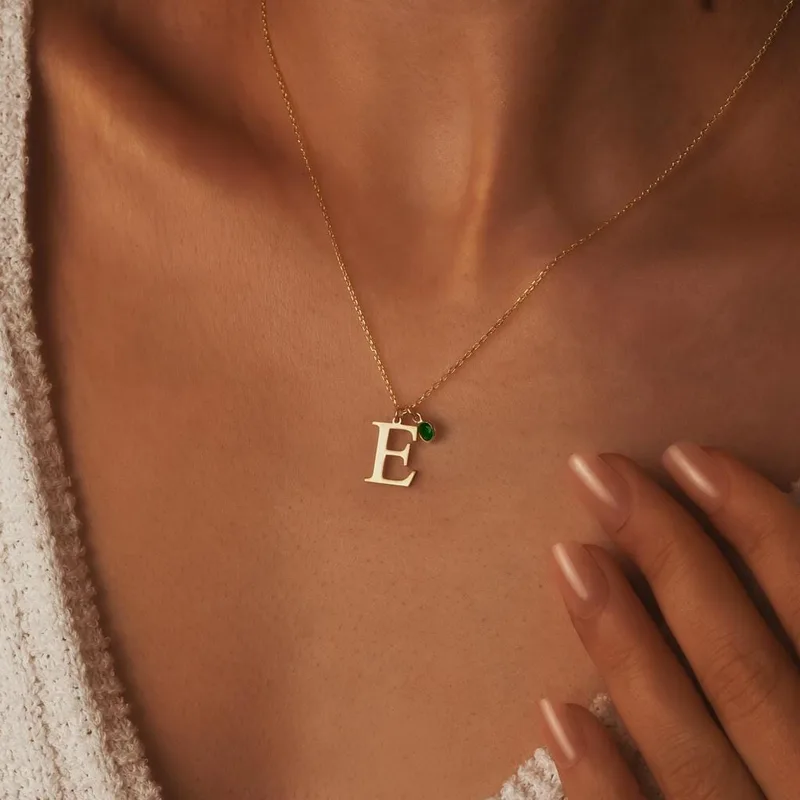
Personalized jewelry sits in an awkward spot. Done well, it becomes the piece someone wears every day for a decade, the one they touch without thinking about it. Done badly, it looks like a souvenir: a name stamped in a swirly font on a thin chain, worn twice and retired to a drawer. The difference is rarely about budget. It is almost always about restraint, and about whether the personalization was added to a piece that could stand on its own without it.
If you are shopping for someone whose taste runs quiet, the goal is jewelry that reads as jewelry first. The personal detail should be something they discover, or something only they understand, rather than the loudest thing about the piece. Here is how to get there.
Start With the Piece, Not the Personalization
The most reliable test for personalized jewelry is to imagine the piece with the personal element removed. Would you still give it? A well-made bar pendant, a simple signet, a clean band, or a small disc charm all hold up as objects before anything is engraved on them. A pendant shaped like a name does not; take the name away and there is no piece left. When the underlying design is strong, the personalization becomes a layer of meaning on top of something already worth wearing. When the design exists only to carry the personalization, the result tends to read as a novelty, no matter how much the recipient loves what it says.
Quiet Details Outlast Loud Ones
There is a meaningful difference between jewelry that announces a detail and jewelry that keeps it. An engraving on the inside of a band, a date on the back of a pendant, or initials small enough that a stranger would have to lean in — these age better than the same information displayed outward. Part of that is practical: tastes change, and a bold statement is harder to keep wearing than a private one. Part of it is emotional. A detail the wearer carries privately feels like a secret between the giver and the recipient, which is exactly the feeling personalized gifts are trying to produce. If the recipient loves bolder pieces, that is worth honoring, but when in doubt, put the meaning where only they will see it.
Choose Details That Will Still Be True in Ten Years
The personalization itself deserves as much scrutiny as the metal. Some details hold their meaning indefinitely; others quietly expire.
- Dates hold up: a wedding, a birth, the day you met. They do not go out of style because they are facts.
- Coordinates and place names hold up when the place genuinely matters: a hometown, the spot of a proposal, a family cabin.
- Handwriting holds up unusually well. A ring or pendant engraved from a parent's or partner's actual handwriting carries something a typeface cannot.
- Nicknames are riskier. Some last a lifetime; some belong to one era of a person's life. If you are not certain, ask someone close to them.
- Jokes are the riskiest of all. An inside joke can be wonderful on a card and exhausting on a permanent object.
A good rule: engrave what will still be true, and still be welcome, in ten years.
Materials Are Where Fussy Becomes Flimsy
Nothing undermines a sentimental piece faster than the piece itself failing. If the intent is daily wear, plated finishes over base metal are a poor match, because plating wears through at exactly the points a loved piece gets touched. Solid gold, gold-filled construction, sterling silver, and platinum all behave differently in price, but they share the quality that matters: the material goes all the way through, so wear polishes the piece rather than ruining it. Listings should say plainly what the metal is. If a listing is vague about materials — "gold tone," "silver color" — treat that as an answer in itself. For a gift meant to mark an anniversary or another serious occasion, the material should be able to keep the promise the engraving makes.
Match the Piece to How They Actually Live
A personalized piece only becomes meaningful if it gets worn, and it only gets worn if it fits the person's real routine. Someone who works with their hands will struggle with a delicate stacking ring, no matter how lovely the engraving. Someone who wears the same two necklaces every day is more likely to adopt a small pendant that layers with what they already own than a statement piece that competes with it. Look at what they wear now: metal color, scale, whether they favor one wrist or bare hands. The goal is a piece that slots into their existing habits, because habit is what turns a gift into the thing they never take off. Browsing gifts for her or the wider personalized gifts range with their daily uniform in mind will narrow the field faster than browsing by occasion.
Leave Time for the Making
Personalized jewelry is made to order, or at least finished to order, and that takes real time: confirming the engraving text, sometimes reviewing a proof, then production and shipping. Rushing this process is where mistakes happen — a misspelled name or a wrong date on a permanent object is a painful way to learn the value of lead time. Order well ahead of the occasion, double-check every character you submit, and if the maker offers a proof or preview, use it. Reading the text aloud, slowly, catches errors that skimming does not.
What is the difference between personalized jewelry and fine jewelry?
They are not opposites. Fine jewelry describes materials and construction — solid precious metals, quality stones, work built to last. Personalized jewelry describes intent: a piece adapted to one specific person. A solid gold band engraved with a date is both at once. The pieces that disappoint are usually personalization applied to weak materials, which is why judging the piece before the engraving matters so much.
What should I engrave on jewelry for it to stay meaningful?
Favor details that are permanent facts of the relationship: dates, coordinates of a meaningful place, a name, initials, or a line in someone's actual handwriting. Be cautious with nicknames and inside jokes, which can expire as life moves on. A useful test is whether the engraving would still feel true and welcome a decade from now, worn on an ordinary day rather than the day it was given.
Which metals hold up best for everyday personalized jewelry?
For daily wear, choose materials that are the same all the way through: solid gold, platinum, sterling silver, or well-made gold-filled pieces. Plated jewelry over base metal tends to wear through at contact points, which is a hard fate for a sentimental piece. Listings should state the metal plainly; vague wording like "gold tone" usually signals plating and is better suited to occasional wear.
How far in advance should I order an engraved jewelry gift?
Order as early as you reasonably can, since made-to-order pieces need time for confirming text, production, and shipping — and custom work is difficult to fix on a deadline. Build in enough margin to review a proof if one is offered, and to correct any error without panic. If the occasion is fixed, like an anniversary or wedding, treat several weeks of lead time as the floor rather than the ceiling.
Reviews & comments
See every public review for this Journal story and leave your own note.