 All stories


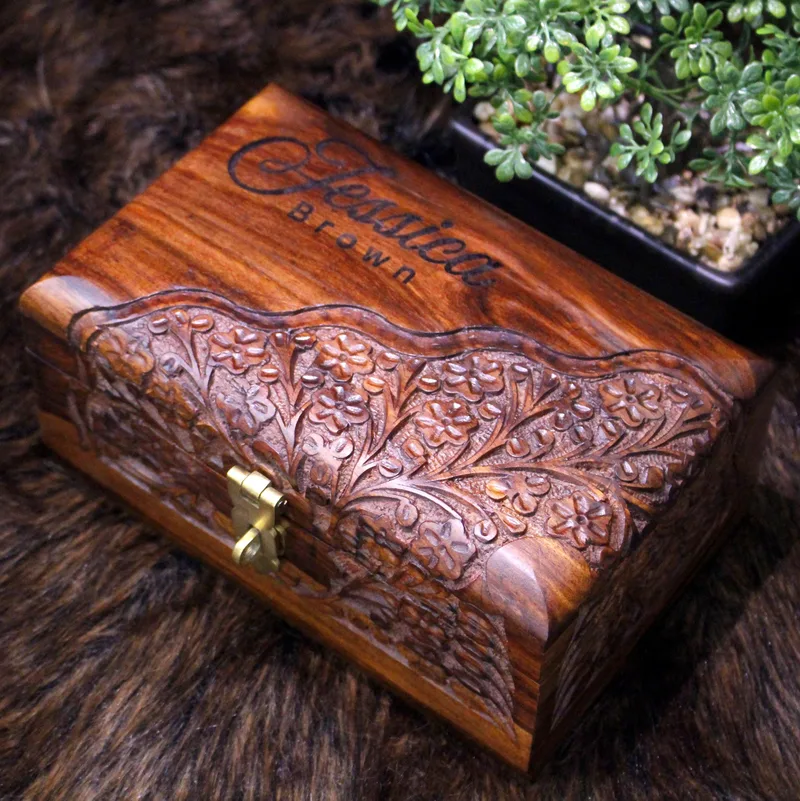
Everyone who has ever decluttered a home knows the hardest box: the one full of things other people gave them. The figurine from an aunt, the engraved paperweight, the plaque with a sentiment in script font. These were all keepsake gifts once. They were given with love, received with thanks, and then spent years in a cabinet before someone finally, guiltily, let them go. The uncomfortable truth about keepsakes is that most of them do not keep.
But some do. Walk through any home and you will find a handful of sentimental objects that survived every purge, every move, every wave of minimalism — and they survived for reasons that are surprisingly consistent. If you want to give a keepsake that ends up in the second category, it helps to understand what separates the kept from the boxed.
Why Most Keepsakes Get Purged
The keepsakes that get donated share a common flaw: they express generic sentiment through a generic object. A plaque that says family, a figurine of two people embracing, a candle labeled with a virtue — these refer to feelings without containing any. They could have been given to anyone, by anyone, and the recipient can sense it. When the decluttering mood strikes, objects like this have no defense, because letting them go discards nothing specific. The lesson for gift buyers is blunt: sentiment is not transferable. An object does not become meaningful because it is labeled with a meaningful word. It becomes meaningful because of what it actually holds — a story, a likeness, a date, a use.
The Story Test
Before buying anything from the gifts and mementos shelf, apply one test: if the recipient had to explain this object to a guest in ten years, what would they say? "My sister gave me that after we drove the coast together, that's the lighthouse we almost missed" survives every purge. "Someone gave me that, I think for a birthday" does not. The strongest keepsakes are tied to one specific event, place, or chapter — not to the relationship in general, but to a particular moment of it. This is why a cheap object from a meaningful trip outlasts an expensive object from nowhere. When you shop, start from the memory and find the object that holds it, never the reverse.
Function Buys Forgiveness
There is a second, less romantic path to survival: usefulness. An object that does a job earns its place even in ruthless households, and if it also carries meaning, it becomes effectively permanent. A serving bowl used every holiday, a watch worn weekly, a blanket on the couch, a well-made knife with a history — these are keepsakes disguised as tools, and they are far harder to purge than pure ornaments because getting rid of them costs something practical. When choosing between a sentimental object with no function and a functional object you can make sentimental — through engraving, through the occasion, through a written note — the functional object usually has the longer life. The everyday personalized gifts that get used weekly beat the precious ones that get shelved.
Made for Them Beats Made for Anyone
The keepsakes with the strongest survival rate are the ones that could not possibly belong to anyone else. Custom work is the purest version of this. A commissioned piece from portraits and custom art — a portrait of the family, a drawing of the house they raised their kids in, a caricature of the couple mid-laugh — cannot be decluttered the way a generic object can, because discarding it would mean discarding a likeness of people they love. The same logic protects a book of collected letters, a framed piece of a child's actual artwork, or a print of a photograph that exists nowhere else. Notice what these have in common: they are irreplaceable. Decluttering methods all ask, in some form, whether an object could be re-acquired if needed. The keepsakes that survive are the ones where the honest answer is never.
Small Enough to Display, Good Enough to Frame
Practical reality decides more than sentiment does: keepsakes survive when they can live on a wall or a shelf in plain sight, and they die in boxes. A keepsake that is awkwardly sized, hard to display, or visually at odds with the recipient's home will migrate to storage no matter how meaningful it is — and storage is where the purge happens. Favor things that frame well, sit small, or hang easily. Quality matters here too: a beautifully made small object gets displayed, while a poorly made large one gets hidden. If you are giving something for a milestone like an anniversary, think about the room it will live in, not just the moment it will be opened in.
A keepsake's real test is not the day it is given. It is the day its owner moves house.
Give the Context With the Gift
Finally, do not make the recipient reconstruct the meaning on their own. A short written note — why this object, why now, what it refers to — physically attached to or stored with the gift, does more for its survival than any amount of engraving. Years later, the note is the provenance; it converts an object into a record. Many of the sentimental objects people keep longest are kept partly because of the card that came with them. It costs nothing, and it is the difference between an object that holds a story and an object that once had one.
What makes a keepsake gift actually worth keeping?
Specificity. Keepsakes survive when they are tied to one particular memory, person, or chapter — not to generic sentiment. A likeness of loved ones, an object from a shared event, or a date that matters gives the recipient something concrete to hold onto. Objects that merely reference emotion in general, like plaques and figurines, are the first to go in any purge.
Are personalized keepsakes better than store-bought ones?
Usually, because personalization done well makes an object irreplaceable, and irreplaceable objects survive decluttering. A custom portrait, a piece engraved with real handwriting, or a print of a one-of-a-kind photo cannot be re-acquired, which protects it. But personalization must be specific to work; a name added to a generic object is only mildly more protected than the object alone.
What keepsake gifts work for someone who is a minimalist?
Choose things that earn a place through use or display: a functional object with meaning attached, a small piece of custom art that frames well, or a consumable experience documented with a photo or note. Minimalists purge objects that are only symbolic, so give the symbol a job or make it genuinely irreplaceable. Small, flat, and frameable beats large and ornamental.
Does a keepsake need to be expensive to last?
No. Survival has almost nothing to do with price and almost everything to do with story, likeness, and usefulness. An inexpensive object from a meaningful moment routinely outlasts costly gifts with no specific reference. Spend your effort on the specificity — the memory it holds, the note that explains it, the way it can be displayed — rather than on the price tag.
Reviews & comments
See every public review for this Journal story and leave your own note.