 All stories


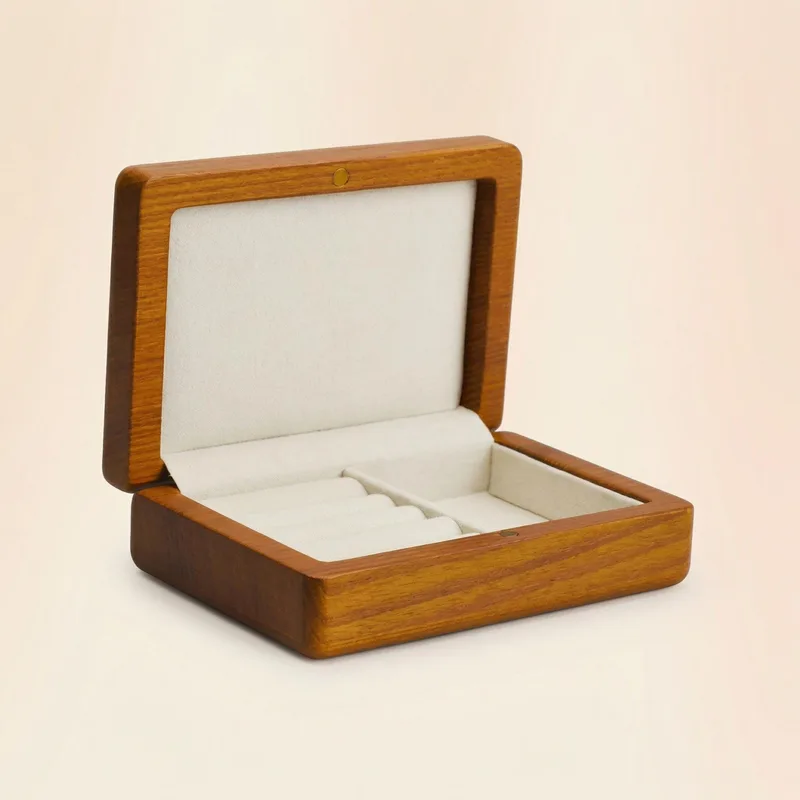
The prettiest jewelry box on the dresser is often the one doing the least to protect what's inside. A single velvet-lined cavity looks luxurious in photos, but in practice it's where chains go to tangle, where earring backs vanish, and where a diamond stud quietly scratches everything it touches. Storage that flatters the box instead of the jewelry is the default in this category, and it's why so many people with genuinely good pieces keep them in a drawer knot.
If you own actual jewelry — pieces you'd be upset to scratch, tarnish, or lose — the storage question deserves the same ten minutes of thought the jewelry itself got. The good news: the logic is simple, it doesn't depend on spending much, and it starts with counting, not shopping.
The Short Answer
Run two systems: an open tray or dish for the handful of pieces in current rotation, and a closed, soft-lined, compartmented box for everything else. Add a hard-sided case for travel or for collections that deserve display. Compartments prevent scratching, a closed lid slows tarnish on silver, and separating daily pieces from the archive keeps the damaging pile-up from ever forming. Buy the box after you count the collection, never before.
Count the Collection Before You Buy the Box
The right storage is determined by the ratio of what you own, so start with a five-minute inventory. Sort by type: necklaces and chains, stud earrings, hooks and drops, rings, bracelets and bangles, watches, and the odd category — brooches, cufflinks, hair pieces. Then sort by frequency: the pieces you reach for weekly, the ones that come out a few times a year, and the sentimental or valuable ones that mostly need protecting.
That inventory reads like a spec sheet. Lots of chains means you need hanging hooks or long flat channels, not cubbies. Mostly studs means a grid of small slots. A ring person needs ring rolls — those padded parallel ridges — more than anything else. And a large "few times a year" pile means the archive box matters more than the daily tray. People who skip this step buy boxes shaped like the average collection, and nobody's collection is average.
Why Lids and Compartments Actually Matter
The two quiet enemies of a jewelry collection are contact and air. Contact first: gemstones and metals vary enormously in hardness, which means jewelry scratches other jewelry. Diamonds and sapphires will happily scratch gold, silver, and any softer stone they share a compartment with, while pearls and opals — soft and porous — are the most vulnerable pieces in a mixed pile. One piece per compartment is the ideal; at minimum, hard stones and soft pieces should never share a cavity, and pearls deserve their own fabric pouch.
Air is the slower enemy. Silver tarnishes by reacting with sulfur compounds present in ordinary household air, and the reaction speeds up with humidity. A closed box doesn't stop tarnish, but it meaningfully slows the exchange of air around the metal — which is why sterling that lives in a lidded box stays brighter than pieces left on an open tray for months. This is also the argument against bathroom storage: humidity, temperature swings, and hairspray make it the worst room in the house for metal.
Plated and layered pieces raise the stakes on both counts. Vermeil, for instance, is sterling silver under a thick layer of gold — a legitimate construction, but the gold layer is finite, and pieces that rub against neighbors in a shared compartment wear it down at the contact points first. Separation isn't fussiness; it's what keeps plated jewelry looking plated.
The Three-Piece System
Daily, archive, travel — three jobs, usually three objects.
The daily station is an open tray, dish, or small stand next to wherever you actually take jewelry off. Its whole job is to beat the alternative, which is the edge of the sink. Keep it small on purpose: five to eight pieces. When it overflows, that's the signal to rotate something back into the archive.
The archive is the classic jewelry box: closed lid, soft lining, real compartments, and ideally dedicated geography — ring rolls, a necklace section with hooks, a grid for studs. This is where most of the collection lives most of the time, and it's where lining quality and layout matter far more than exterior looks.
The travel or display case is the piece people skip and then regret. A hard-sided, lockable case with a secure interior keeps pieces from grinding against each other in a suitcase, and clear-topped versions do double duty at home as protected display for a collection you'd rather look at than hide. The picks under this story cover this spread deliberately — an archive-style box and a locking display case are different answers to different problems, not competitors.
What to Look For (and What to Skip)
Worth your money:
- Soft lining — velvet, felt, or microsuede — on every interior surface, including the dividers, not just the floor.
- Purpose-built geography: ring rolls, necklace hooks with a channel to keep chains apart, and small slots for studs.
- A lid that closes fully and sits flush; a loose lid is just decoration.
- Smooth drawers and hinges — a box that's annoying to open ends up bypassed, and the pile on top of it begins.
- A lock, if the box will share space with small children or roommates, or hold pieces you'd hate to explain losing.
Skip without guilt:
- Single-cavity boxes for a mixed collection, however beautiful the outside.
- Bare wood or bare metal interiors that put hard surfaces against your pieces.
- Boxes so small that storage means stacking — stacking is scratching on a schedule.
- Necklace storage with no hooks or channels; a flat drawer of loose chains is a tangle generator.
- Anything you'd have to keep in the bathroom to use.
Spend in Proportion to What's Inside
At the entry level, a lined compartment organizer plus a simple dish covers a starter collection honestly — protection comes from separation and a lid, and neither requires spending much. The solid middle is a proper multi-layer box with real geography, and it's the right tier for most people whose collection has outgrown one layer. The heirloom tier — brass, hardwood, boxes with weight and presence — is partly jewelry storage and partly dresser furniture, and it's the tier that works as a serious gift: a substantial box given for a milestone tends to outlast the occasion, which is why they show up so often as anniversary gifts. The sensible rule across tiers: the box should cost a fraction of what it protects, but the lining and layout should never be the corner that got cut.
If you're gifting storage rather than buying for yourself, it's one of the more forgiving presents in the jewelry orbit — you don't need to know ring sizes or metal preferences, just that the person owns more pieces than their current system handles, which is nearly everyone. Browsing gifts for her alongside dedicated organizers turns up both furniture-grade boxes and travel cases that solve real problems.
Mistakes People Make
- Storing the whole collection in one open dish. Fine for the two rings you wear daily; ruinous as a system. Keep the dish, add an archive box, rotate between them.
- Keeping jewelry in the bathroom. Humidity accelerates tarnish and corrosion. Move the box to the bedroom, and keep near the sink only what you'd wear in the shower anyway.
- Buying the box before counting the collection. The result is always the same: the necklace person ends up with cubbies, the ring person with hooks. Inventory first.
- Letting silver live on open trays for months. Rotate silver back into the closed box when it's out of use; the difference shows within a season.
- Traveling with good pieces loose in one pouch. One pouch per piece, or a structured case — chains and stones grinding together in transit is how jewelry comes home worse than it left.
Why does silver tarnish faster in some rooms?
Tarnish is a surface reaction between silver and sulfur compounds in the air, and it accelerates with humidity and certain household chemicals. Bathrooms and kitchens are the fastest-tarnishing rooms in most homes; a closed box in a dry bedroom is the slowest. You can't stop tarnish entirely, but a lidded, lined box kept away from moisture visibly slows it compared to open-air storage.
Should necklaces be hung or laid flat?
Hang chains individually on hooks when the box or stand allows it — hanging prevents tangling and keeps pieces visible. Lay flat only if each necklace gets its own channel or pouch; loose chains sharing a drawer will knot. For delicate or heavily beaded pieces, flat and separated is gentler than hanging, since long-term hanging puts constant tension on fine links and stringing.
Is a jewelry box a good gift, or too impersonal?
It's one of the better gifts in the jewelry category precisely because it skips the hard questions — no sizes, no metal preferences, no style guesses. A substantial, well-lined box says you noticed the person's collection outgrew its storage. If you want the gift to carry both a practical and a personal layer, pair the box with one small wearable piece inside it.
How should I store jewelry when traveling?
Structure beats softness: a hard-sided case with a lined, compartmented interior protects better than any drawstring pouch. Fasten clasps before packing so chains can't thread themselves into knots, give pearls and soft stones their own pouches inside the case, and keep valuable pieces in hand luggage. A locking case adds tidiness and peace of mind in shared rooms more than real security — treat it as insurance, not a safe.
Reviews & comments
See every public review for this Journal story and leave your own note.